


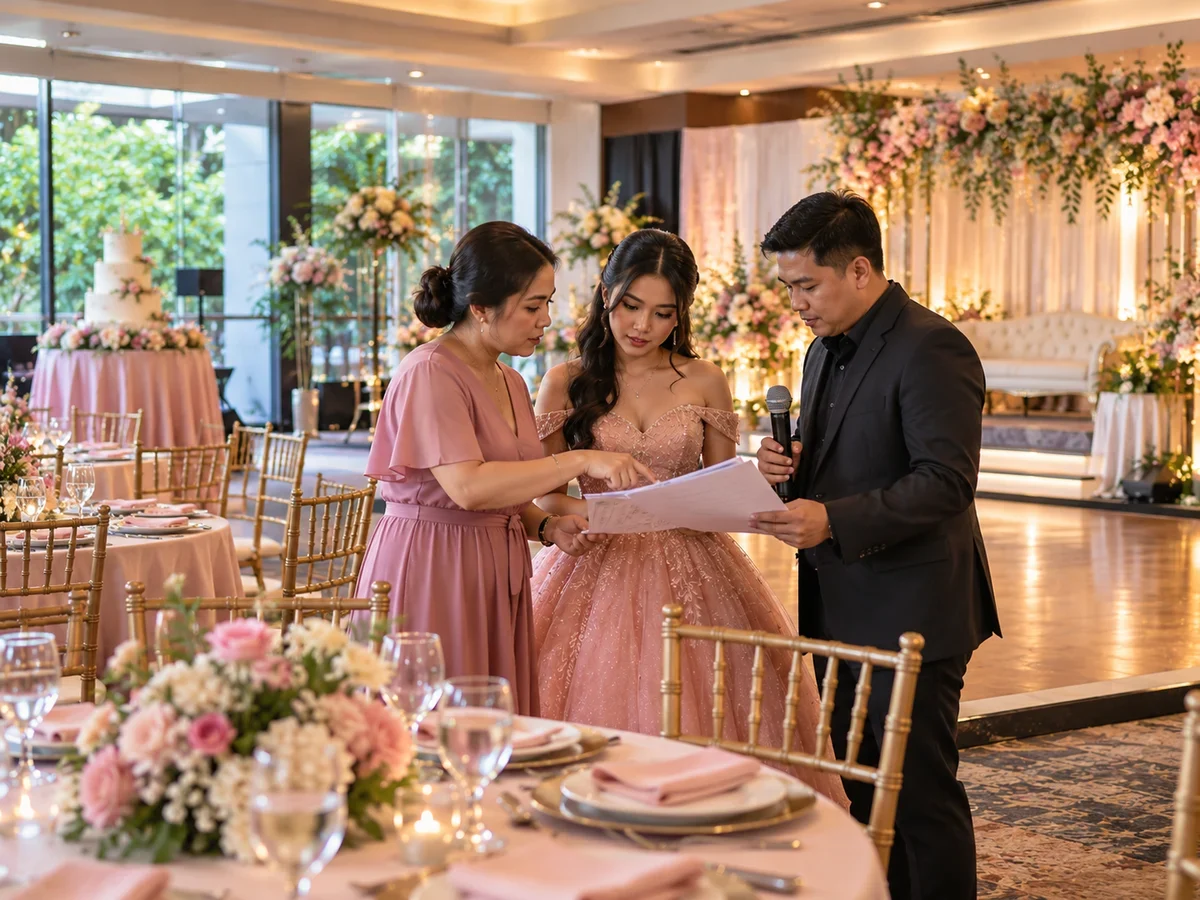

What should a Debut program include?
There is no single official order that every Filipino Debut has to follow. Families commonly combine a grand entrance, dinner, some of the traditional “18s,” family messages, photos, cake, an AVP or performance, and a social portion after the formal program.
The practical question is not how many segments you can fit into the evening. It is how many will still feel meaningful once dinner, transitions, photos and the inevitable small delays are included.
A simple family celebration may only need an entrance, meal, a few messages, cake and photos. A formal Debut may include 18 Roses, 18 Candles, 18 Treasures, a cotillion, AVP and more structured hosting. Both can work.
Which kind of Debut program fits your celebration?
A shorter, more intimate program
This works well when the family wants the occasion to feel special without filling the night with formal segments. It can suit a smaller function room, restaurant-style celebration or family gathering where dinner and conversation matter as much as the program.
Typical elements may include:
- guest arrival;
- celebrant entrance;
- welcome or prayer;
- dinner;
- one or two selected traditions;
- family messages;
- cake;
- photos;
- social time.
A standard Debut program
This gives the celebration a familiar formal structure without trying to include every possible tradition. The family may keep the three best-known 18s, add an AVP or one performance, then leave enough time for dinner and photos.
Typical elements may include:
- guest arrival and registration;
- grand entrance;
- opening;
- dinner or a defined meal window;
- 18 Roses;
- 18 Candles;
- 18 Treasures;
- AVP or performance;
- cake and celebrant response;
- photos;
- social or dancing portion.
A fuller formal program
A longer formal program may also include a cotillion, multiple performances, family presentations, ceremonial entrances or other family-specific segments.
This format needs the strongest time control. The more people involved, the more time disappears between names being called, participants walking into position, music cues, microphone handovers and photos.
A four-minute segment on paper can easily take longer once those transitions are included.
Dinner should have its own place in the program
Guests notice the program differently when they are hungry.
For many Debuts, the biggest scheduling mistake is putting too many long segments before the meal. Eighteen dances plus eighteen speeches plus another eighteen gift presentations can occupy a large part of the evening even before photos and transitions are counted.
There are several workable ways to handle dinner.
Dinner before most of the formal traditions
Guests eat after the opening and entrance, then the main program resumes. This can make a longer formal Debut easier to sit through because nobody is waiting for the entire ceremony before eating.
It also gives the catering team a clearer meal window.
Dinner between major program blocks
The family may hold the opening and one important segment, pause for dinner, then continue with the remaining traditions.
This is useful when the program is long enough to benefit from a natural break.
Dinner alongside a lighter part of the program
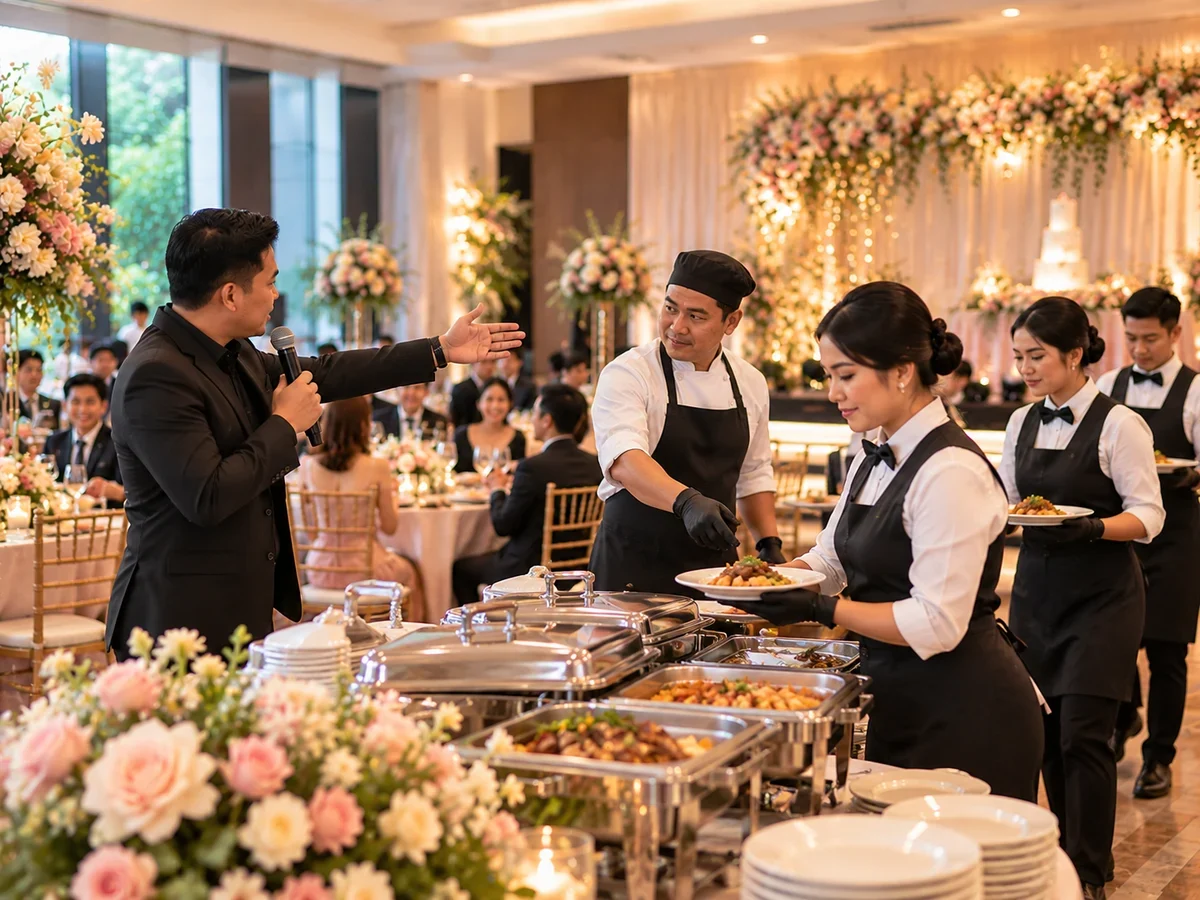
Some families prefer food service to continue while an AVP, background performance or other less interactive segment is happening.
That only works when the host, venue and catering team agree on the timing. A major speech, dance sequence or photo call is harder to follow when guests are moving to and from a buffet.
If you are considering plated service, confirm that it is available for your event and chosen menu. The serving sequence needs closer coordination with the program than a self-directed buffet.
Sample short Debut program — around 2½ hours
This is one possible flow for a family that wants a meaningful 18th birthday without a long formal reception.
- Guest arrival and light background music
- Celebrant entrance and welcome
- Opening prayer or family message
- Dinner
- Selected tradition or family tribute
- AVP or short message from parents
- Birthday song, cake and celebrant response
- Family and group photos
- Social time / music
- Formal close or continue informally
The times are examples, not rules. If the family wants 18 Roses but not the other 18s, that one tradition can be the centrepiece instead of adding several smaller segments simply to fill the program.
What makes the short version work?
The family decides what is genuinely important before invitations or supplier scripts make the program more complicated. A short program still needs proper transitions, but it has more room for dinner, conversation and photos.
Sample standard Debut program — around 3½ hours
This version fits families who want the familiar Debut structure while keeping the evening moving.
- Guest arrival and registration
- Grand entrance
- Welcome / opening prayer
- Dinner
- 18 Roses
- 18 Candles
- Short AVP or intermission
- 18 Treasures
- Birthday song and cake
- Debutante's response / thank-you
- Family and group photos
- Social / dancing portion
- Formal close or continue informally
The exact length of each 18s segment depends heavily on how long participants speak, how quickly people move into position and how many photo pauses are added.
If all three 18s are important to the family, the host should know in advance whether each participant is expected to give a message, dance, present a gift, or simply join the segment. Unclear instructions are where a clean schedule often begins to stretch.
Sample formal Debut program — around 4 hours
A more formal Debut may have a cotillion, AVP, performances and a fuller ceremonial structure. The program can still feel comfortable when the family protects meal time and limits unnecessary transitions.
- Guest arrival and registration
- Formal opening
- Debutante entrance
- Welcome / prayer / family opening
- Dinner service
- Cotillion or formal dance
- 18 Roses
- AVP / short performance
- 18 Candles
- 18 Treasures
- Parent or family message
- Birthday song and cake
- Debutante response
- Group photos
- Social / dancing portion
- Formal program ends
A formal program does not need to feel rushed, but it should have a clear ending. Once every segment is treated as open-ended, the celebration can easily run beyond the venue schedule and compress the part of the evening the debutante was most looking forward to.

Where do 18 Roses, 18 Candles and 18 Treasures fit?
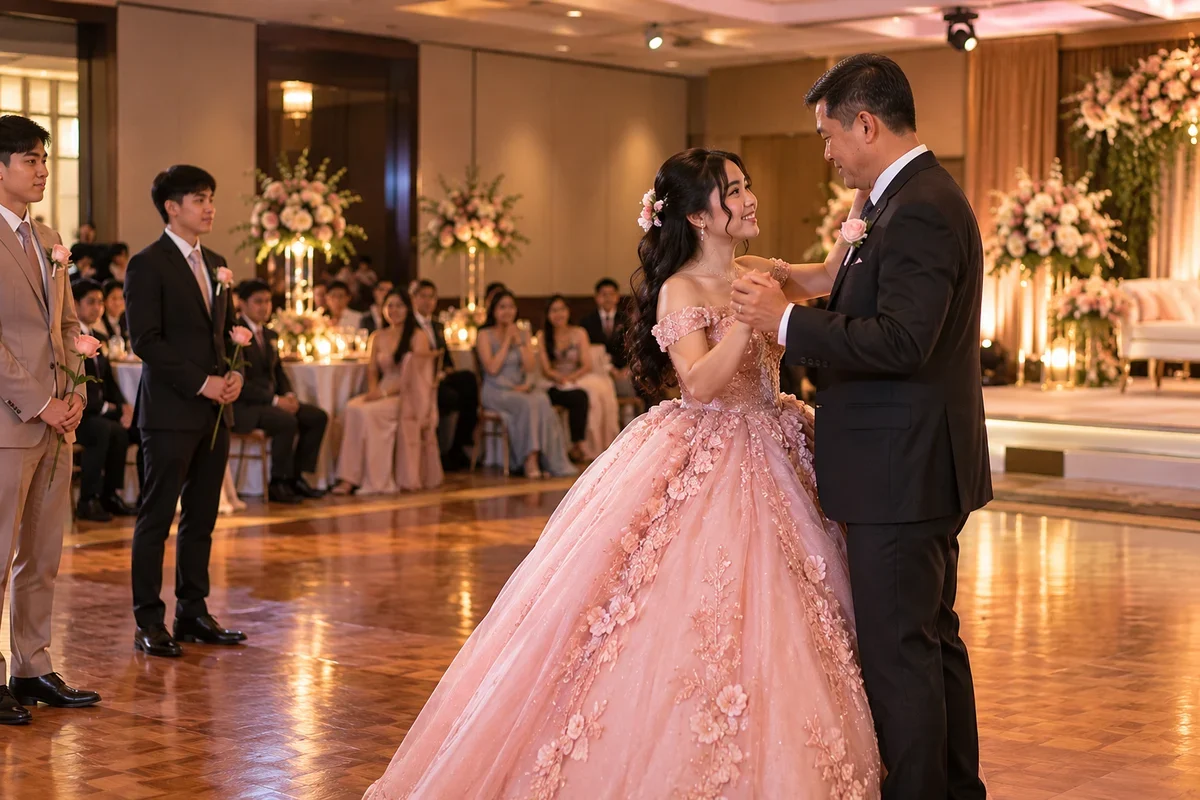
The three best-known “18s” can all fit into one program, but they do different jobs.
is usually the most movement-heavy. Participants are called one by one for a dance or presentation, so music cues and walking time matter.
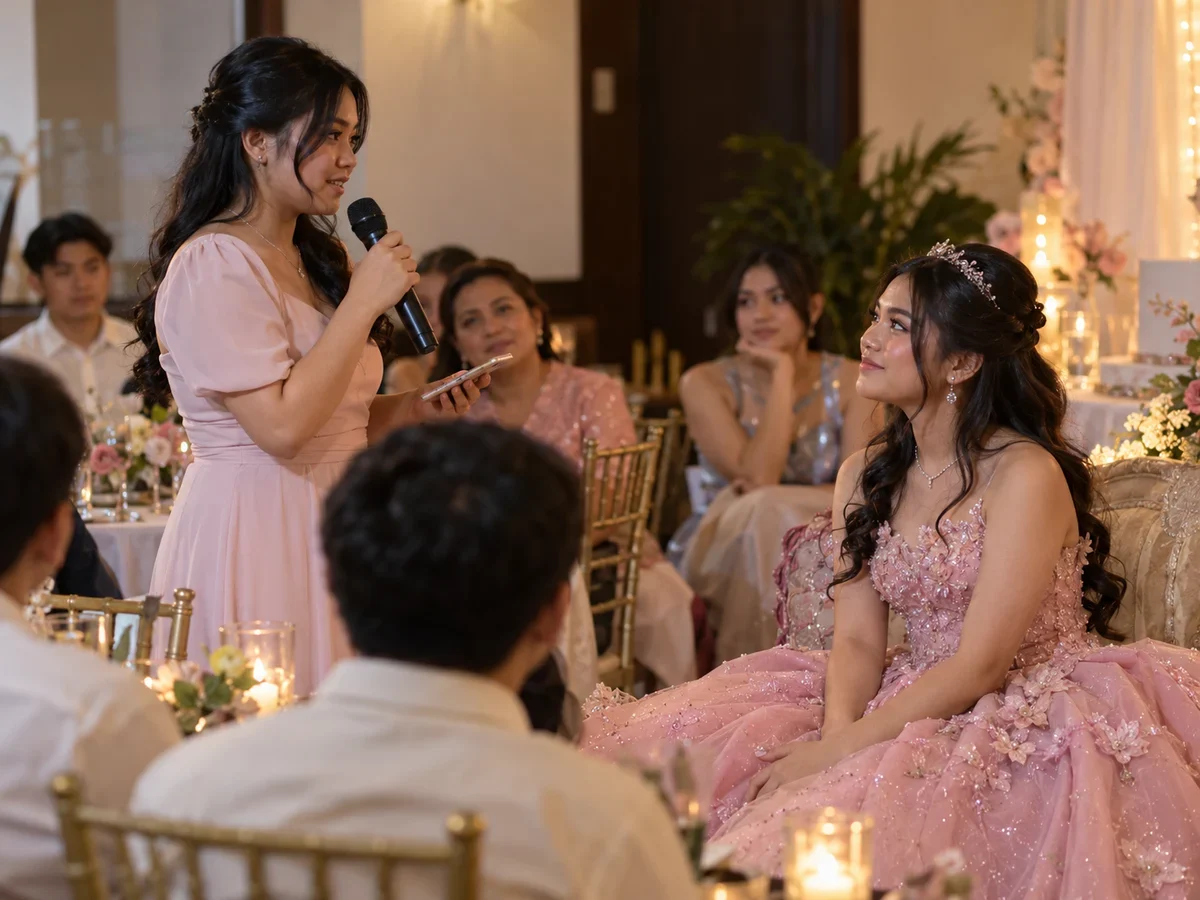
is usually message-heavy. Even short speeches add up across eighteen participants. This is often the segment that needs the clearest speaker briefing.
combines presentation, explanation and handover time. The family should decide whether each giver will speak and where the gifts will be placed afterward.
A cotillion or another formal dance also needs rehearsal and space, so it deserves its own place rather than being squeezed between unrelated segments.
For the meaning of these traditions, who may participate and which modern variations families use, see the Filipino Debut Traditions guide.
You do not have to include all three
Some families keep one or two traditions and leave out the rest. Others replace a formal segment with letters, a video, a performance or something more personal to the debutante.
The program is stronger when a segment has a reason to be there.
Speeches can make or break the timing
One heartfelt message can be memorable. Eighteen unplanned five-minute speeches can change the entire night.
For any segment with multiple speakers, send the instructions before the event. Participants should know:
- whether a message is expected;
- roughly how long it should be;
- where they should wait;
- whether they need a song or AV cue;
- what to do if they arrive late.
The host should have a printed or digital list of names in the correct order. Confirm pronunciations beforehand instead of fixing them live on stage.
Host cues that keep the night moving
A good run sheet tells the host more than the next segment title.
Useful cues include:
- who is already waiting backstage or near the dance floor;
- whether music starts before or after the introduction;
- whether food service should pause or continue;
- when photographers need people to stay in place;
- whether the next speaker has a microphone;
- what happens if a participant is missing.
The emcee does not need a long scripted paragraph for every transition. Clear names, cues and responsibilities are usually more useful.
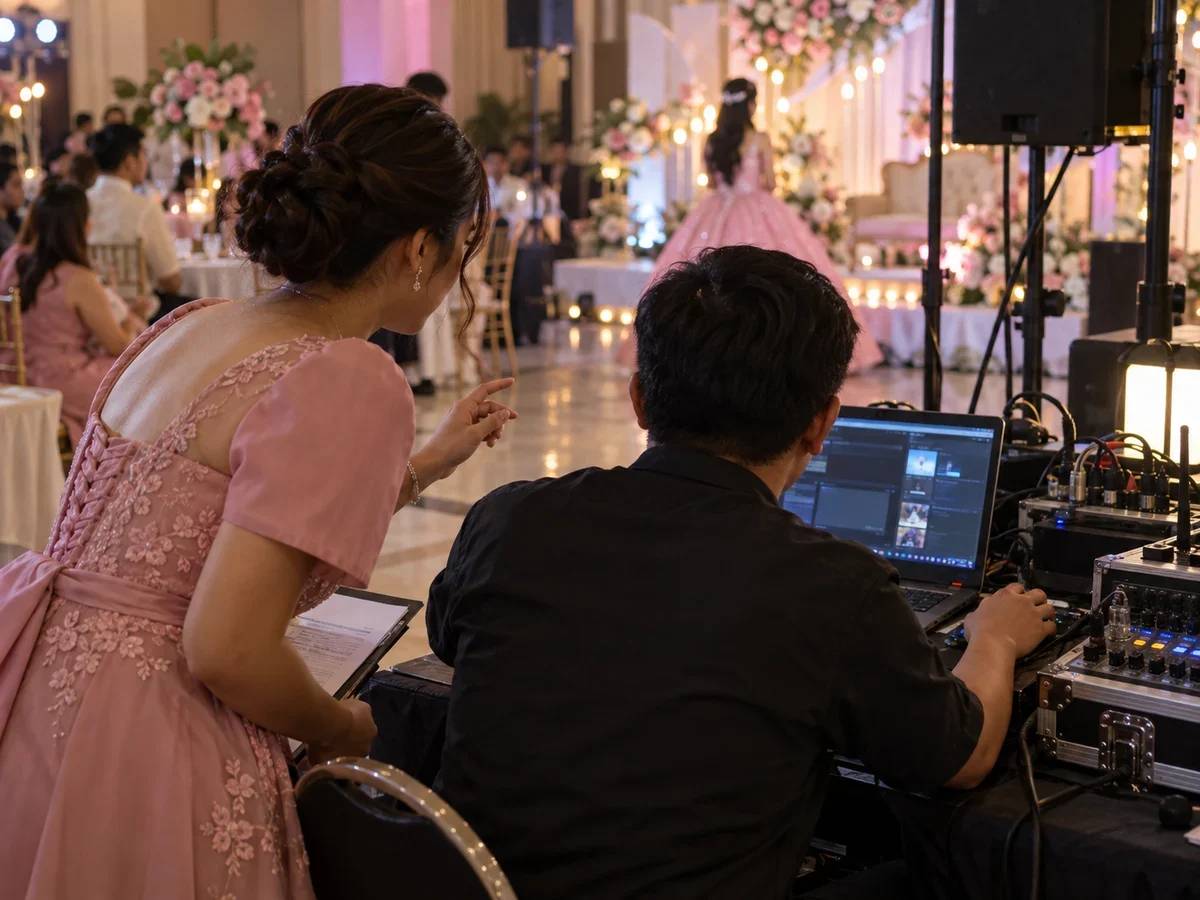
What if one of the 18 participants is late or absent?
Decide the rule before the event.
Possible options include:
- move that participant later in the same segment;
- skip the slot and continue;
- let an agreed substitute participate;
- keep the person's name/message for a later family moment.
The best option depends on the family. What matters is that the host does not have to negotiate it onstage while the room waits.
For 18 Candles or another speech-based segment, written messages can also be collected in advance if the family wants a backup.
What if the Debut program is already running late?
Most event delays are easier to handle when the family knows which parts are essential and which parts are flexible.
If the program has slipped behind:
- protect the meal window if guests have not eaten;
- remove or shorten an optional intermission;
- combine photo calls instead of repeatedly bringing the same people back;
- move a non-essential speech to later;
- skip an optional performance if the performer agrees;
- tell the catering, venue, sound and photo/video teams that the order has changed;
- keep the venue's closing or pull-out schedule in view.
Do not quietly compress a food-service window without telling the catering team. Staff, equipment, replenishment and clearing are planned around the sequence they were given.

A practical Debut program run sheet
A program becomes much easier to manage when one document is shared by the family, host and key suppliers.
Use these columns:
| Scheduled | Actual | Segment | Person responsible | Host cue | Music / AV | Food / service | Photo / video | Backup note |
|---|---|---|---|---|---|---|---|---|
| 6:00 PM | Grand entrance | Host + coordinator | Introduce debutante | Entrance track | Hold guest movement | Entrance coverage | Delay 5 min if needed | |
| 6:20 PM | Dinner | Catering + host | Announce meal | Background playlist | Open buffet / begin service | Table candids | Extend if queue is slow | |
| 7:00 PM | 18 Roses | Host | Call names in order | Individual tracks | Clear dance floor | Dance coverage | Late participant moves to end |
You can continue the table for every program segment.
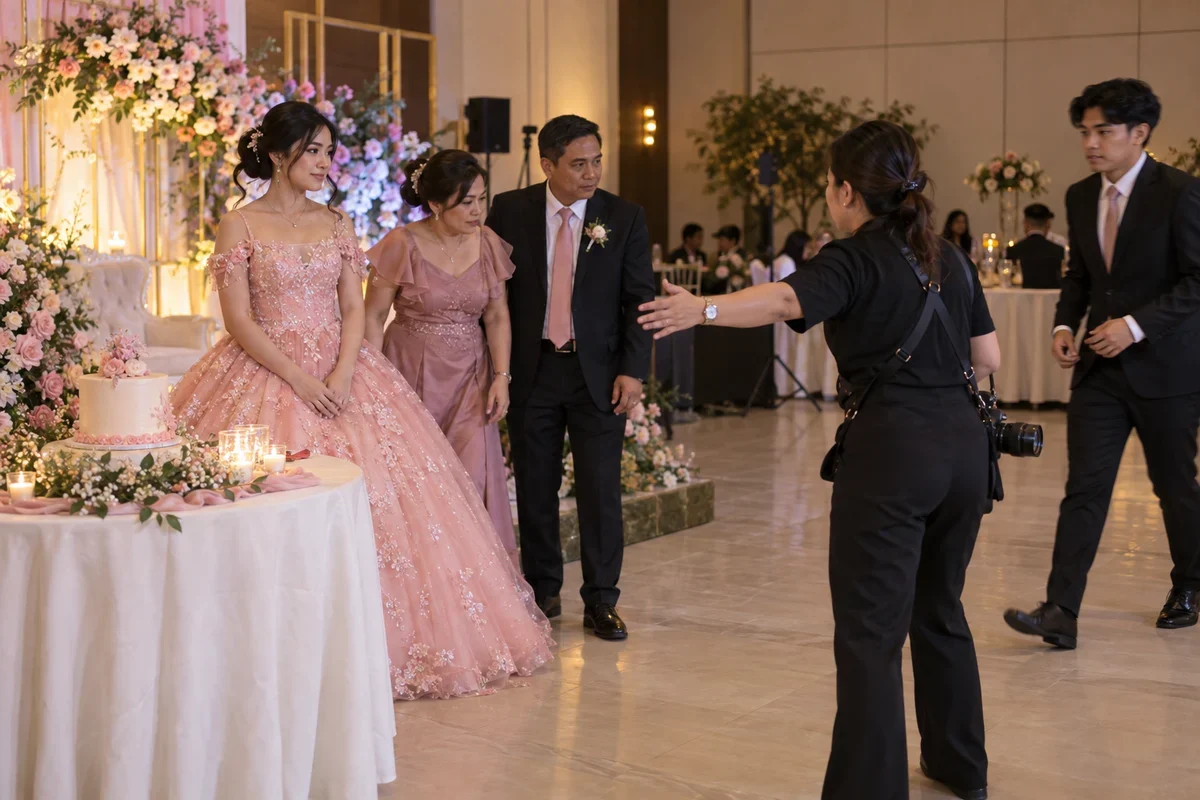
What should be finalized before the event?
The working run sheet should include:
- final participant names;
- pronunciation notes;
- song list;
- AVP file name and backup copy;
- speeches or message expectations;
- supplier arrival and setup times;
- meal-service timing;
- cake timing;
- family/group photo list;
- venue end time;
- contact person for each major supplier.
A printed copy at the venue is still useful even when everyone also has the file on their phone.
How should the program and catering plan work together?
The catering plan does not need to control the whole Debut, but the meal cannot be treated as an afterthought.
Before the event, the host and catering contact should both know:
- when guests are expected to eat;
- whether the buffet opens all at once or by cue;
- whether a major speech or dance is happening during service;
- when clearing can begin;
- when cake is expected;
- whether the program has a hard venue cutoff.
If you are still choosing the food and service format, Jojie's Debut Catering page will cover menus, buffet or other verified service options, quotation inputs and venue requirements once those details are confirmed for your event.
For Jojie's broader staffed-event offering beyond Debuts, see our full-service catering in Manila.
Common questions about Debut program flow
How long should a Debut program be?
There is no required duration. A shorter family celebration may fit into roughly two to three hours, while a fuller formal reception may take longer. The more traditions, speeches, performances and photo calls you include, the more transition time you need to allow.
The better question is whether the program fits the venue schedule, meal service and the parts of the night the debutante actually wants.
Should dinner come before 18 Roses?
It can. Many families place dinner before most of the longer formal segments so guests are not waiting through the whole program before eating.
Other families put one important segment before dinner and continue afterward. The right order depends on the event schedule and service setup.
Do we need 18 Roses, 18 Candles and 18 Treasures?
No. These are widely used Debut traditions, but a family may keep all, some or none of them. The celebration can be adapted to the debutante and the family.
Can 18 Candles happen during dinner?
It is possible, but speeches are harder to follow while people are queuing, being served or moving around the room. If messages are an important part of the celebration, a quieter program window usually gives them more attention.
What happens if the program runs late?
Protect the essential parts first: meal service, meaningful family segments, cake and any venue timing that cannot move. Optional performances, repeated photo calls or extra speeches can usually be shortened or moved more easily.
Should we hire an emcee?
A host is helpful when the program has many participants, AV cues and transitions. A smaller family celebration may be handled by a confident relative or friend. The more complex the program becomes, the more useful it is to have one person responsible for moving the room from one segment to the next.
When should we send the final program to suppliers?
Send a working version early enough for the venue, caterer, sound team and photo/video team to identify conflicts, then send the final run sheet once names, timings and cues are settled. If the program changes close to the event, make sure everyone receives the same updated version.


Planning the rest of the Debut
The program is only one part of the reception.
For the meaning and organisation of 18 Roses, 18 Candles, 18 Treasures and other optional traditions, see Filipino Debut Traditions.
If you are still deciding how the reception should look, the Debut Theme Ideas guide will help you match the theme to the venue, guest count, program and level of styling.
For menus, service format, equipment, venue requirements and a quotation, continue to Debut Catering in Manila.
Plan the food and service for your Debut