


Party planning checklist
Party Planning Checklist for Metro Manila Events

Planning a birthday, reunion, family celebration or other private event can become complicated quickly because one decision affects several others. Your guest count changes the food, tables and chairs you need. Your venue affects setup, supplier access and serving space. Your budget limits how many extras you can add after the essentials are covered.
This checklist helps you work through those decisions in a practical order so you can see what needs an answer now, what can wait and what should be reconfirmed before the event.
Quick answer: what should you decide first?
Start with four things:
- What are you celebrating?
- What is your working budget ceiling?
- How many guests are you realistically expecting?
- Will the event be at home, in a restaurant or function room, or in a separate event venue?
Those four answers shape most of the plan that follows.
If one of them changes, update the parts that depend on it instead of rebuilding the whole plan from the beginning.
Master Party Planning Checklist
Use this as your working list. You do not need every answer on the first day.
Event basics
Venue and setup
Food and service
Decorations, supplies and optional extras
Guests and communication
Program and responsibilities
Final confirmation
Event day
Plan the party in phases instead of trying to finish everything at once
A useful checklist is not only a list of tasks. It should also show which decisions unlock the next ones.
Phase 1: Set the shape of the event
Decide the occasion, budget ceiling, guest-count range, date and basic venue format first.
This is the point where you should be able to say something like:
“We are planning a family birthday for around 40 to 50 people, with a fixed overall budget, and we are choosing between our home and a nearby function room.”
That is already enough information to make better decisions about space, food and rentals.
Phase 2: Turn the headcount and venue into a practical setup
Once the guest-count range and venue are clearer, work out seating, serving space, furniture, food format and the parts of the venue guests and suppliers will actually use.
A venue may technically fit the headcount but still feel cramped once buffet tables, cake, gifts, registration, sound equipment or activity space are added. At home, the same issue appears when normal furniture competes with temporary tables and guest seating.
Phase 3: Invite people and tighten the numbers
Send invitations and keep one working RSVP list.
The goal is not to predict the final count perfectly. It is to make the number more useful as the event gets closer. When the headcount changes, check the food, seating and rental quantities that depend on it.
Phase 4: Stop adding ideas and reconfirm the plan
As the event approaches, the priority shifts from inspiration to confirmation.
Recheck who is coming, what has been ordered, when suppliers can enter, who will receive them, where items will be placed and who is responsible for the important parts of the day.
Phase 5: Run the event and close it properly
On the day, follow a simple run sheet instead of relying on memory.
After the event, make sure rented items, borrowed equipment, supplier collections and remaining payments or records are handled before everyone leaves.
Set the budget and guest count together
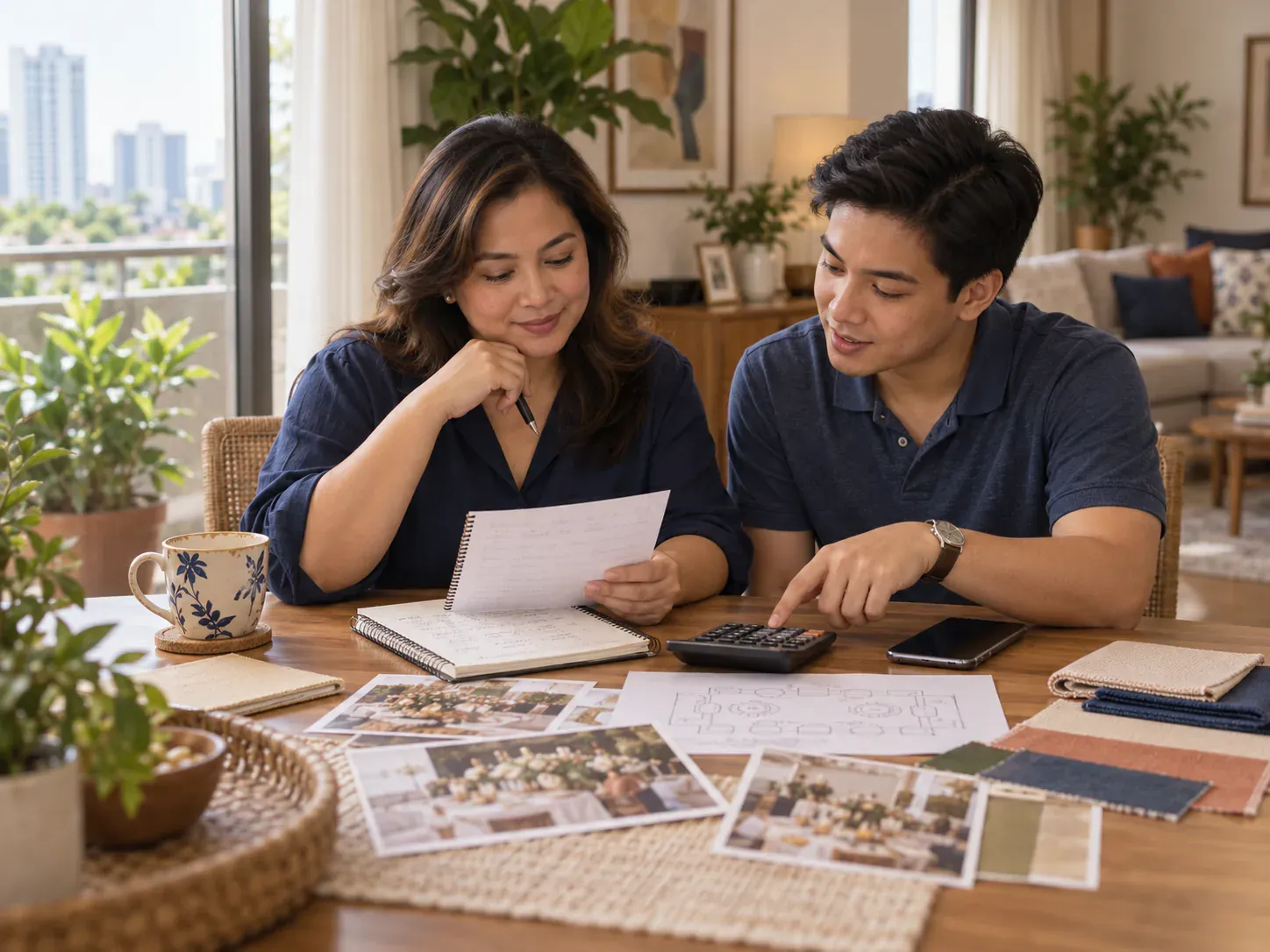
The guest list and budget influence each other more than almost any other part of the plan.
If the budget is fixed and the guest count keeps growing, something else usually has to change. That may mean a simpler menu, a different venue, fewer decorative extras or a more self-managed setup.
Start with a working budget ceiling instead of trying to price every detail separately. Then divide the plan into priorities.
For many parties, the essentials are:
- enough food and drinks;
- a workable place to celebrate;
- comfortable seating or standing space;
- the basic serving/setup requirements;
- any event-specific need that genuinely matters to the occasion.
After those are covered, you can decide how much room is left for styling, entertainment, souvenirs and other optional details.
A smaller guest list can sometimes give you more flexibility. A larger guest list can still work well, but it usually makes quantity, flow and setup more important.
Home, restaurant/function room or separate event venue?
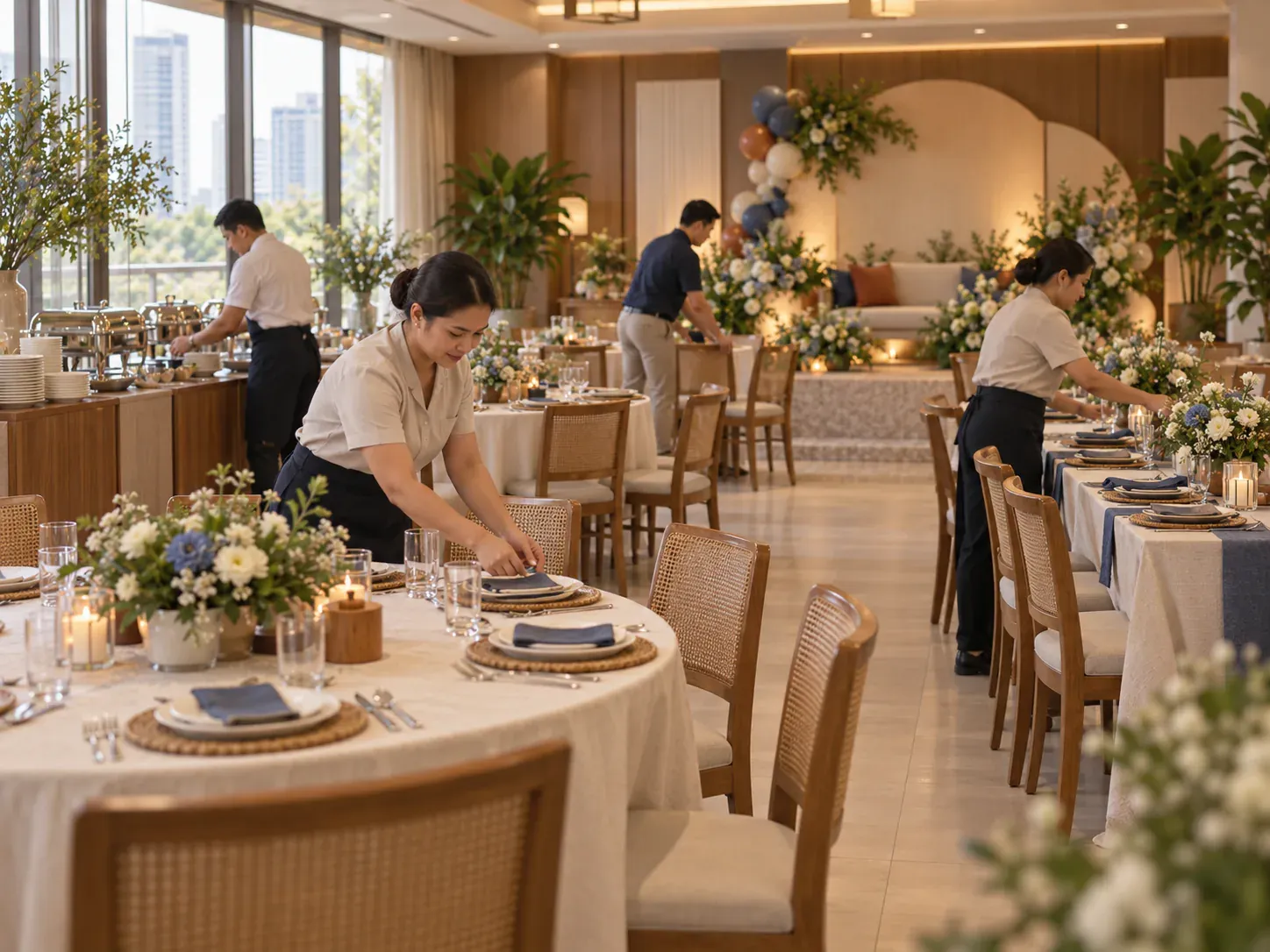
There is no one correct venue format for every party. Compare the amount of space, setup work and flexibility you actually need.
At home
A home celebration can be practical when the guest count fits the space and the family is comfortable handling more of the setup.
Check:
- where guests will sit or stand;
- where food will be received and served;
- whether furniture needs to be moved;
- parking and access around the property;
- travel time for guests and suppliers;
- weather exposure for outdoor areas;
- how cleanup will be handled.
For a larger home gathering, supplier access and temporary furniture can become more important than the room dimensions alone suggest.
Restaurant or function room
This can simplify parts of the plan when the venue already provides food, tables, chairs or basic service.
Before assuming everything is included, confirm:
- the actual event area;
- what furniture and equipment are included;
- outside-food or supplier rules;
- decoration and setup restrictions;
- arrival and ending times;
- parking or building access;
- realistic travel time for guests and suppliers.
Separate event venue
A dedicated venue may give you more flexibility over catering, layout and program, but it can also create more supplier coordination.
Ask about:
- loading and supplier entrances;
- elevators or stairs;
- setup and pack-down access;
- power and equipment restrictions where relevant;
- food preparation or staging areas;
- parking;
- travel time and route considerations for guests and suppliers;
- rain backup for outdoor areas;
- security or gate-pass requirements.
For Metro Manila events, those operating details can affect the day as much as the room itself.
Choose the food format around the event and the work you want to keep
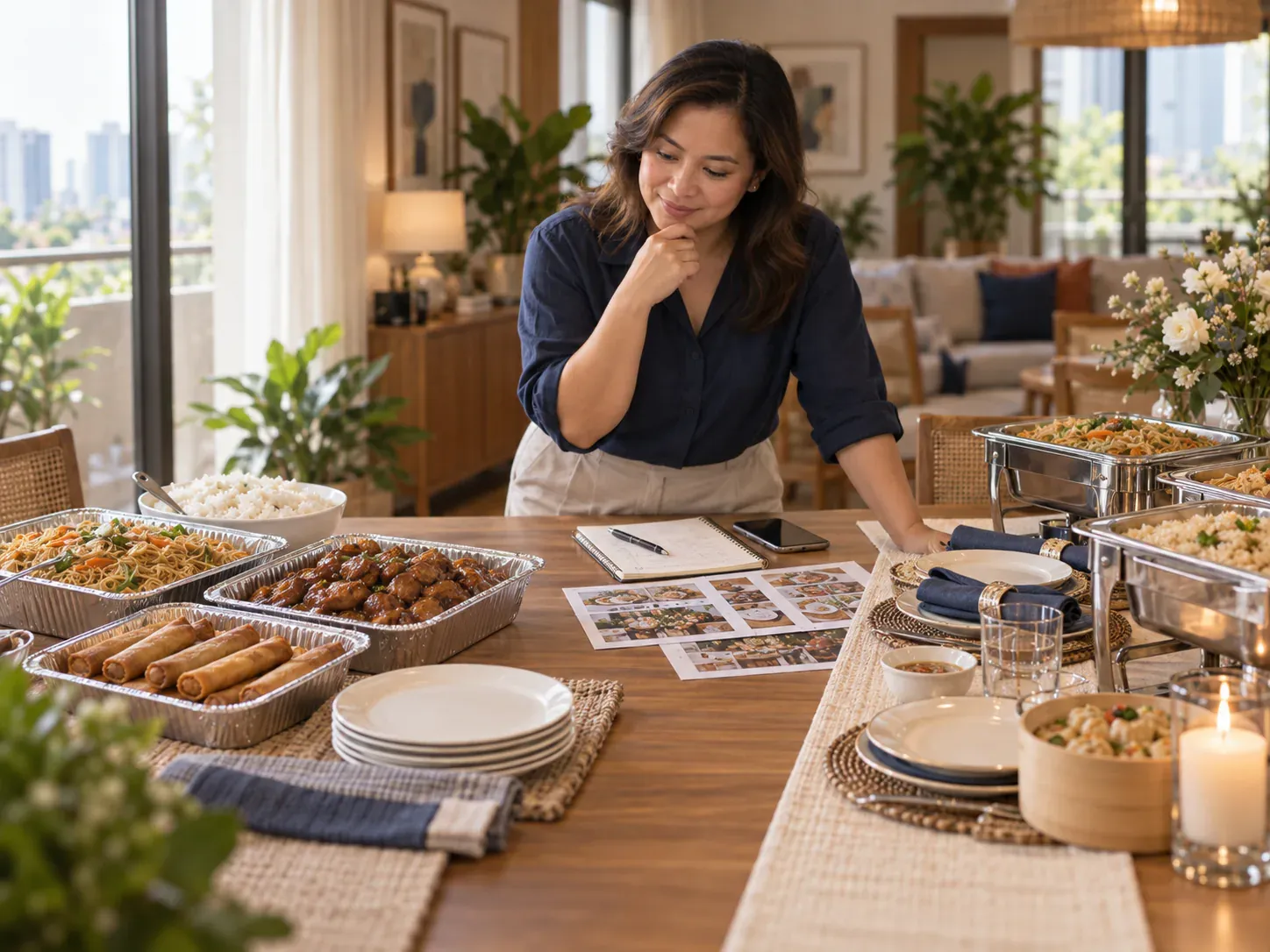
Food planning is not only about choosing dishes. It is also a decision about service, setup and how much work the host wants to manage on the day.
Home-cooked or potluck
This can work well for a smaller, informal gathering when the host and guests are comfortable coordinating who prepares, brings, serves and stores the food.
The trade-off is that more of the work stays with the family or group.
Think through:
- who is cooking or bringing each dish;
- when the food will arrive;
- where hot and cold dishes will be kept;
- who will set out and replenish the food;
- serving utensils, plates, glasses and cutlery;
- leftovers and cleanup afterwards.
For a small gathering, that may be manageable. As the guest count increases, coordination can become a bigger part of the event.
Prepared Party Trays
Party Trays can make sense when you mainly need prepared dishes and are comfortable managing the serving table, portions and cleanup yourselves.
This format can work for home celebrations, family gatherings, office-style get-togethers and other events where you do not need a full catering setup.
Before ordering, check:
- your expected headcount;
- what dishes are already being provided by family or friends;
- how many different dishes you actually need;
- where the trays will be placed;
- whether you have enough serving utensils and table space;
- who will receive the order.
You can compare Jojie's current dishes and ready-made Sets on the Party Trays Manila page.
Full-service catering
Full-service catering becomes more useful when you want the food and the agreed service/setup scope coordinated as part of the event rather than handled separately by the host.
This can be especially helpful when:
- the guest count is larger;
- the venue needs a more organised food setup;
- the host does not want family members managing food during the event;
- there is a defined meal period;
- the occasion calls for a more structured guest experience.
The exact setup depends on the event and the catering arrangement, so confirm what is included rather than assuming every catering service works the same way.
See Jojie's Catering Services when your celebration needs more support than prepared food alone.
Restaurant or venue-provided food
If the restaurant or venue supplies the meal, confirm what the arrangement actually includes.
Ask about:
- menu choices;
- serving format;
- drinks;
- cake or dessert rules;
- outside food;
- corkage or other venue rules where applicable;
- meal timing;
- whether tables, service staff and basic setup are already included.
This can reduce supplier coordination, but it may also give you less flexibility than bringing in your own food or caterer.
Match the food format to the amount of hosting work you want
The useful question is not simply:
“Which option is cheapest?”
It is also:
“How much of the food setup, serving and cleanup do we want to handle ourselves?”
A host who enjoys setting up a family buffet may be perfectly happy with Party Trays. Someone organising a larger event may prefer to hand more of that work to a catering team.
Neither approach is automatically better. The right choice depends on the size and style of the celebration, the venue and how involved the host wants to be during the event.
Plan tables, chairs and support areas around how guests will use the space
Furniture should follow the event plan, not the other way around.
Think about:
- guest seating;
- food and buffet tables;
- cake/dessert area;
- registration or gift table if needed;
- children or older guests who may need a different setup;
- activity or program space;
- paths for people to move comfortably.
If the venue does not supply what you need, use Jojie's Party Needs & Rentals to compare planning options, or go directly to Tables & Chairs Rental Manila and Catering Equipment Rental for current rental information.
Do not rent extra furniture simply because it appears on a generic checklist. Tie each item to a real use in your event.
Decorations, supplies and optional extras: decide them after the essentials
Decorations are easier to control once the guest count, venue and food plan are reasonably clear.
You do not need an elaborate theme for every celebration. A simple color direction, a cake area, a few table details or one photo spot may be enough if that fits the occasion.
Before buying or booking extras, check what the venue already provides and what the budget still needs to cover.
Useful things to review include:
- decorations or a simple color/theme direction;
- cake and dessert setup;
- basic signs or labels guests may need;
- souvenirs or giveaways, if they matter to the occasion;
- a photo area, if the family actually wants one;
- serving or setup supplies that are not already included;
- activity or program materials.
Treat these as choices, not mandatory party requirements.
If the essentials are still moving—especially the guest count, venue or food budget—hold off on optional purchases that may no longer fit the final plan.
Invitations and RSVPs should improve the plan, not just announce the party
An invitation should make the important details easy to understand:
- what the event is;
- date and time;
- venue;
- who is invited;
- how to RSVP;
- any useful arrival or access instructions.
As replies come in, update one working guest list.
If the party is in a condominium, office building, gated subdivision or another place with access procedures, collect or send the required arrival information early enough to avoid confusion on the day.
The RSVP list also helps you update food, seating and rental quantities instead of relying on the original invite count.
Keep the program proportional to the occasion
Not every party needs a long program.
A relaxed family birthday may only need a welcome, meal, cake and time together. A reunion may include photos, speeches or memory-sharing. A milestone celebration may need a clearer sequence because more people are involved.
Write down only the moments that need coordination.
A simple run order might include:
- guest arrival;
- welcome;
- meal;
- main program or activity;
- cake/photo moment;
- closing or final announcements.
If the event includes games, performances, a host or technical equipment, identify who is responsible for each one.
The main organizer should not be the only person who knows what happens next.
Make a supplier and responsibility sheet
One of the easiest ways to reduce event-day confusion is to know who answers each type of question.
Your list can be simple:
| Responsibility | Person / contact |
|---|---|
| Main organizer | |
| Backup organizer | |
| Venue contact | |
| Food/catering contact | |
| Rental/equipment contact | |
| Supplier receiving contact | |
| Delivery/courier contact | |
| Program/host contact | |
| Payment/confirmation records | |
| Cleanup/returns contact |
For a small party, one person may fill several roles. That is fine.
The useful part is deciding it before the supplier is already at the gate or the organizer is busy with guests.
What should you reconfirm before the event?
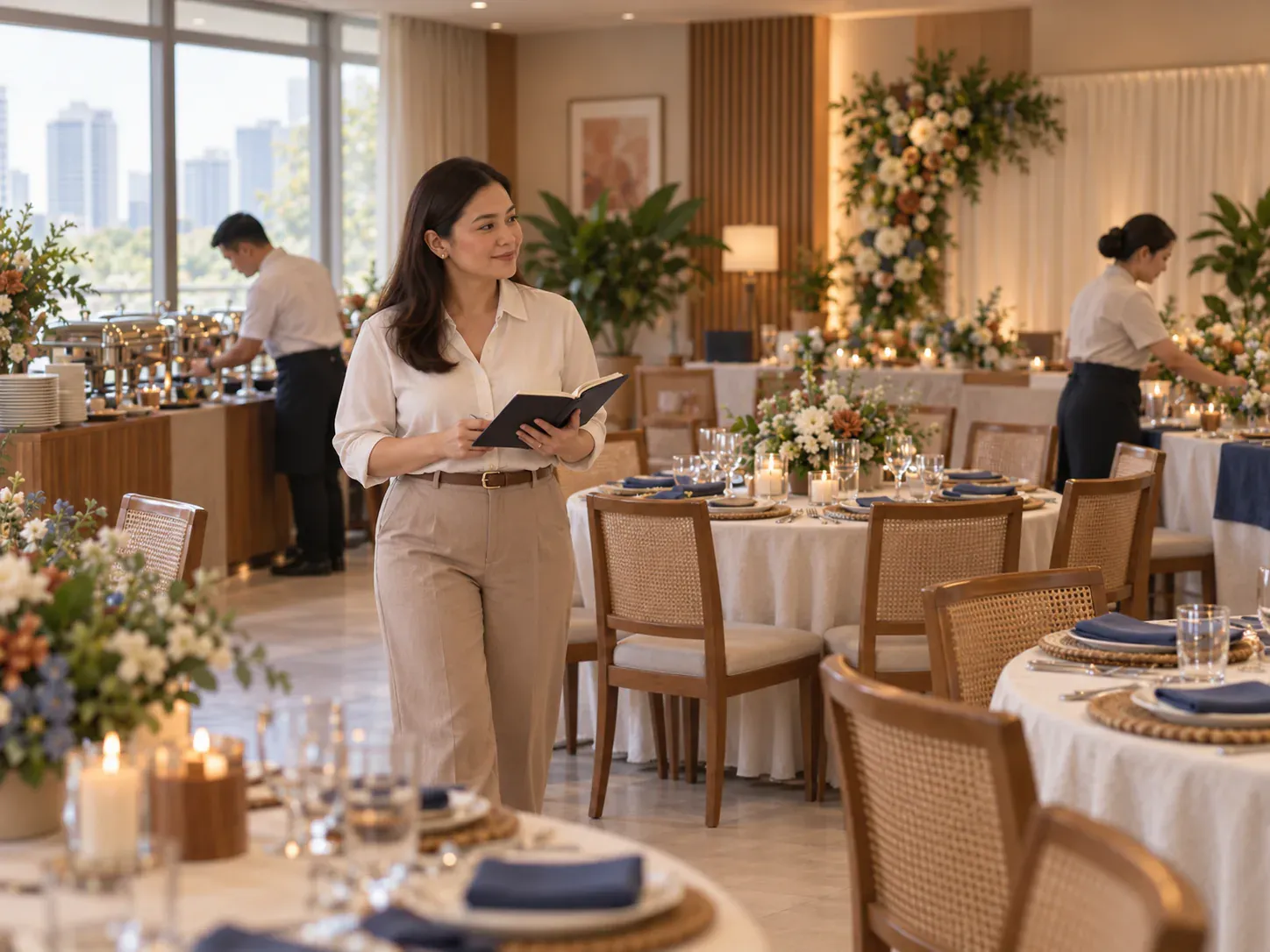
Use the final confirmation phase to close gaps instead of adding new ones.
Recheck:
Guests
- current expected headcount;
- important dietary information guests have shared;
- arrival instructions.
Venue
- full address;
- event area;
- access/setup time;
- parking/loading;
- gate passes or building rules;
- rain backup where relevant.
Food and rentals
- order or quotation details;
- quantities;
- serving/setup requirements;
- confirmed arrival or ready time;
- delivery/arrival details;
- collection or return arrangements where applicable.
People
- who receives suppliers;
- who handles guest arrival;
- who manages the program;
- who keeps the key contact numbers and confirmations.
Host items
- cake tools or candles if needed;
- payment/confirmation records;
- program notes;
- personal items that cannot be delegated.
A short final check usually prevents more problems than adding one more decoration idea.
A simple event-day run sheet
You do not need a minute-by-minute production schedule for a normal private party.
You do need to know the important handoffs.
Before guests arrive
- venue/home walkthrough;
- supplier receiving;
- confirm the receiving contact has their phone available and knows which suppliers or deliveries are still expected;
- tables/chairs/setup check;
- food/service readiness;
- cake/gift/registration areas ready;
- program items in place.
As guests arrive
- someone available for directions or registration if needed;
- gifts or personal items placed safely;
- organizer free enough to welcome guests rather than solve setup problems.
During the event
- monitor the meal timing;
- keep the main program moving;
- check whether older guests, children or anyone needing assistance is comfortable;
- handle supplier questions through the assigned contact where possible.
Before people leave
- distribute anything that needs to go home with guests;
- confirm collection/return responsibilities;
- check rented or borrowed items;
- make sure the cleanup plan is understood.
After the event
- complete returns or collections;
- keep final supplier/payment records;
- store useful notes for the next family or community event.
When your party needs a more specific guide
A general checklist should not try to answer every type of event in one page.
Use the more specific Jojie's planning pages when the occasion has its own decisions:
- 7th Birthday Party Checklist for the Filipino 7th-birthday milestone;
- 60th Birthday Party Ideas for milestone planning;
- Corporate Event Planning Checklist for office/company events;
- Wedding Planning Guide Philippines for wedding preparation;
- Homecoming & Reunion Planning Guide for reunions and homecomings;
- Baptism in the Philippines for baptism and christening planning.
Kids birthday planning, theme and games resources should be linked here only after their current owner routes are live and accepted.
Frequently Asked Questions
What should I decide first when planning a party?
Start with the occasion, working budget ceiling, realistic guest-count range and venue format. Those decisions affect food, seating, rentals, invitations and the amount of setup the host will need to manage.
What should be on a party planning list?
A useful party planning list should cover the occasion, budget, guest list, date and venue, food/service format, setup and rentals, decorations or supplies, invitations and RSVPs, program responsibilities, supplier contacts, final confirmations, event-day checks and cleanup or returns.
What should be included in a party planning checklist?
The checklist should turn those planning areas into actions you can actually mark complete. Start with the decisions that affect other tasks—budget, guest count and venue—then work through food, setup, guest communication, responsibilities, supplier confirmations and event-day closeout.
How do I plan a party around a fixed budget?
Set the total ceiling early, cover the essentials first, keep the guest count realistic and compare event formats before spending on optional extras. Track both money already committed and budget still available. If the guest list grows, revisit the items that scale with headcount such as food, seating and venue space.
Is it easier to celebrate at home, in a restaurant/function room or at an event venue?
It depends on your guest count, space, service expectations and how much setup you want to manage. A home celebration may keep the format informal but leave more work with the host. A restaurant or function room may already include food, furniture or basic service. A separate event venue can provide more flexibility but may require more supplier coordination. Also compare parking, supplier access and realistic travel time—not only room capacity.
When do Party Trays make more sense than full-service catering?
Party Trays can fit a gathering where you mainly need prepared food and can manage serving and cleanup yourselves. Full-service catering is more appropriate when you want the food and agreed service/setup scope coordinated together. Compare Party Trays Manila with Catering Services based on how much event-day work you want to keep.
What should I check for a Metro Manila venue?
Confirm the actual usable event space, parking and loading, supplier entrance, security or gate-pass procedures, elevators where relevant, setup access, food/service areas, guest accessibility and a bad-weather plan for outdoor areas. Also consider how long it will realistically take guests and suppliers to reach the venue.
What should I reconfirm before the party?
Recheck the expected headcount, venue access, food and rentals, confirmed arrival or ready times, supplier and courier details, assigned contacts, program responsibilities and cleanup/return arrangements. Make sure the organizer has one current list of important contacts and confirmations.
How far in advance should I start planning a party?
Start as soon as the date, guest-count range and likely venue become clear. Larger events and dates with limited venue or supplier availability generally need more planning time than small home gatherings. Instead of relying on one universal countdown, work in phases: settle the major decisions first, tighten the guest count and setup next, then use the final period for confirmations rather than adding new ideas.
How can I make party planning less stressful?
Reduce the number of open decisions at the same time. Set the budget and guest-count range first, choose a workable venue and food format, keep one guest list, assign important responsibilities and use a final confirmation list. The goal is not to control every detail; it is to make sure somebody knows who is handling the details that matter.
Finish the plan by choosing the right next step
Once your guest count, venue and food format are clearer, move to the part of the event that needs a real decision.
- Need prepared food for a self-managed gathering? Compare Party Trays Manila.
- Need fuller event food/service support? See Jojie's Catering Services.
- Need tables, chairs or serving equipment? Start with the Party Needs & Rentals.
The checklist is there to keep the event organized. You do not need to turn every item into a separate project.
Review or print the Master Party Planning Checklist before you finalize your plans.