
A simple guide for your family’s 7th birthday
7th Birthday Party Philippines: Program, Ideas and Checklist
Plan a celebration that feels meaningful to your family, enjoyable for your child, and manageable from the first guest arrival to the final thank-you.
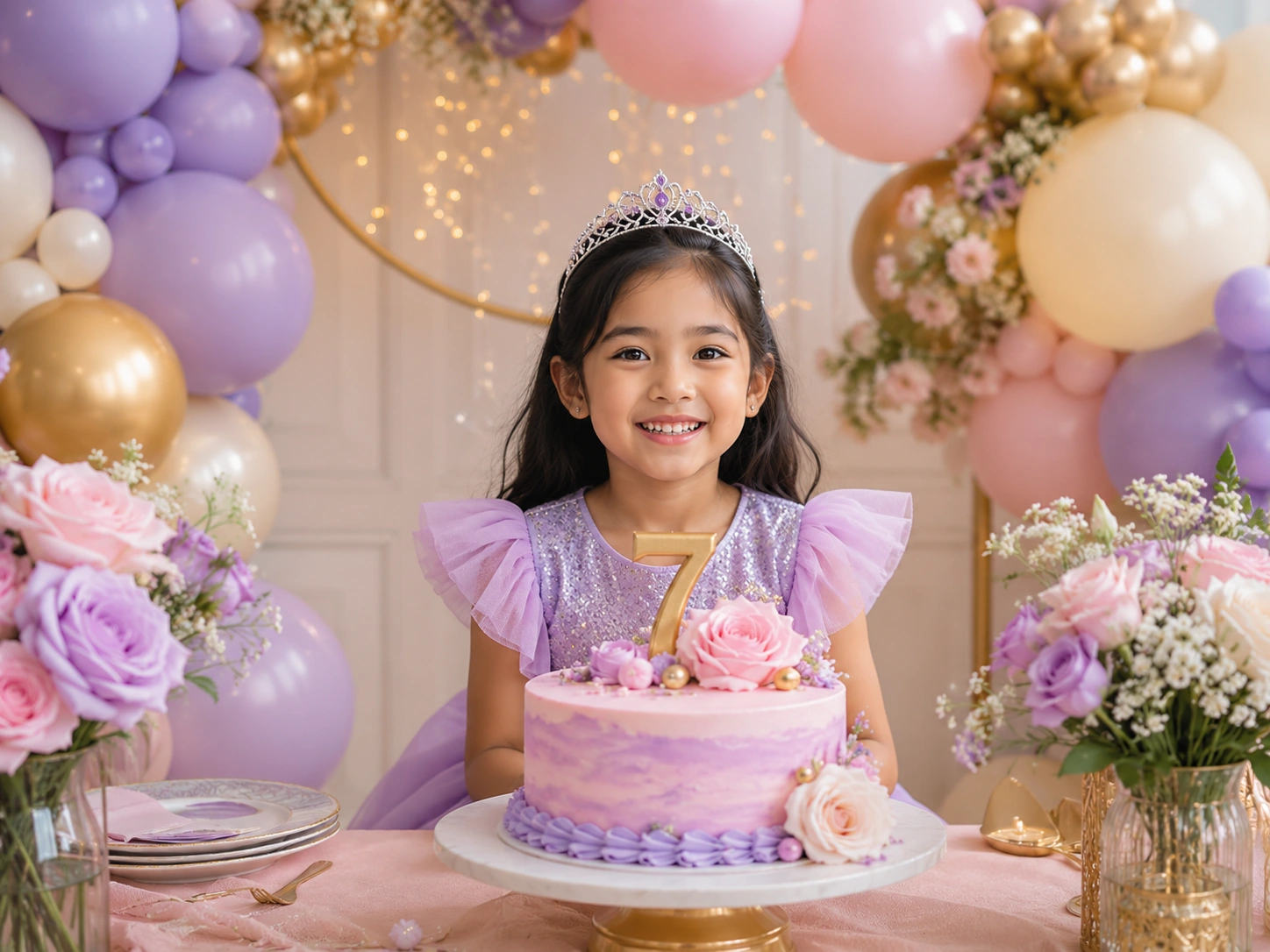
The illustrations in this guide help you picture each idea. Jojie’s real food and event photos appear on our service and menu pages.
Begin with the child
Start with the celebration your child will enjoy
Some families prefer a simple meal at home. Others invite classmates, prepare party games, include symbolic “7” traditions, or arrange a full catered celebration. The best format is the one that suits your child, your guests, your available space, and the kind of day your family wants to remember.
Before choosing decorations or writing the program, ask a few basic questions:
- Does your child enjoy being the center of attention?
- Would they prefer a large party or a smaller gathering?
- Are most guests children, adults, or a mixture of both?
- Do you want games, a structured program, a meal, or all three?
- Are ceremonial “7” traditions meaningful to your family?
- Will the celebration take place at home, in a clubhouse, or at an events venue?
- Which parts should feel formal, and which parts should remain relaxed?
A child who enjoys games and performing may appreciate a lively program. A quieter child may prefer activities, a family meal, or a shorter celebration with close friends.
A successful seventh-birthday party should feel personal, manageable, and comfortable for the child—not like a performance they have to endure.
A family milestone
Why do families celebrate a seventh birthday?
In many Filipino families, turning seven is treated as a special childhood milestone.
At this age, children may be entering a more independent stage of school life, forming stronger friendships, developing clearer interests, and participating more actively in decisions about their own celebrations.
The meaning varies from family to family. It may be a family tradition, a values-centered occasion, a chance to recognize growing independence, a reunion for relatives and school friends, or simply an especially memorable birthday.
You do not need to describe the occasion as a “mini debut” unless your family genuinely wants that type of program. A seventh birthday can still feel important while remaining playful, child-centered, and age-appropriate.
Choose the format first
Choose the right size and style of celebration
The party format affects almost every later decision, including the venue, food, program length, furniture, and number of suppliers.
| Celebration style | Works well when | Planning focus |
|---|---|---|
| Simple family meal | The child prefers a quiet celebration | Favorite food, cake, family photos, and a short message |
| Home birthday party | Guest count is manageable and space is available | Seating, weather backup, cleanup, and neighbor considerations |
| Condo or subdivision clubhouse | Families want more room without using a large events venue | Venue rules, setup windows, sound limits, and furniture |
| Classmates and friends party | The child wants games and activities | Age-appropriate games, supervision, prizes, and food timing |
| Full catered celebration | The family wants structured food service and event support | Guest count, Kids’ Menu, Adult Buffet Menu, setup, and quotation |
| Experience-based celebration | The child prefers an activity, outing, or workshop | Travel time, reservations, food arrangements, and adult supervision |
A flexible planning pace
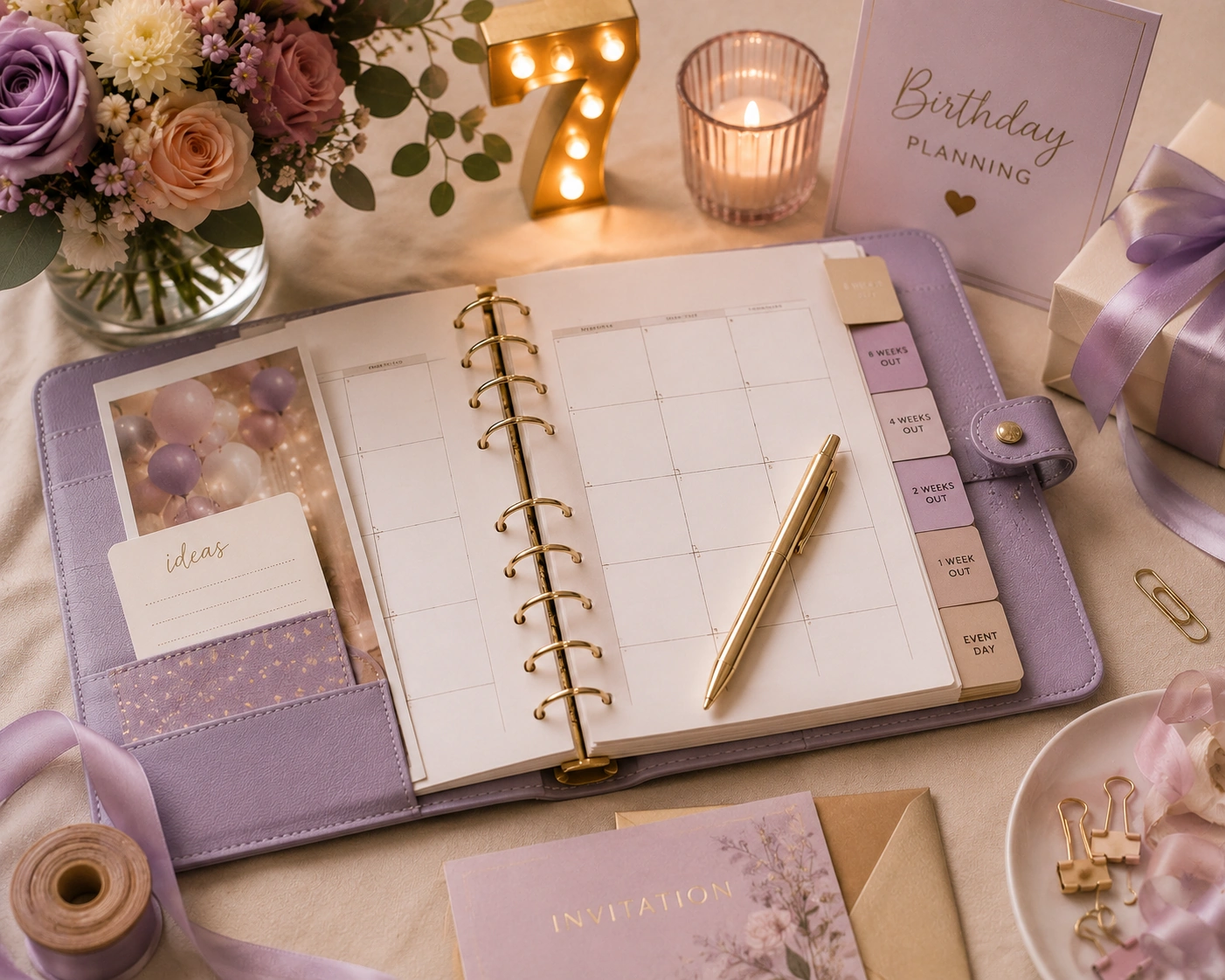
An eight-week planning timeline
You may need more or less time depending on the venue, guest count, and suppliers. Use this as a flexible guide rather than a strict requirement.
Set the direction
Ask the child what kind of celebration they want, prepare the guest list, choose dates and venue options, set priorities, and decide whether symbolic traditions belong in the program.
Choose the traditions and activities you want to include
Confirm the venue, invitations, menu direction, furniture needs, games, and relatives who may participate in the program.
Build the details
Confirm the working guest count, program sequence, prizes, cake, food, suppliers, music, and allergy information shared by parents.
Prepare materials
Finalize the guest count where required, prepare messages and props, check access times, and confirm a weather backup.
Pack and confirm
Pack decorations, tools, prizes, backup clothes, contact lists, and charged devices. Review the program with the host.
Stay flexible
Check the venue, brief helpers, keep the child comfortable, and allow time for delays or spontaneous moments.
Close carefully
Collect belongings, store leftovers safely, complete supplier requirements, and save messages and photos.
Program templates
Sample seventh-birthday party programs
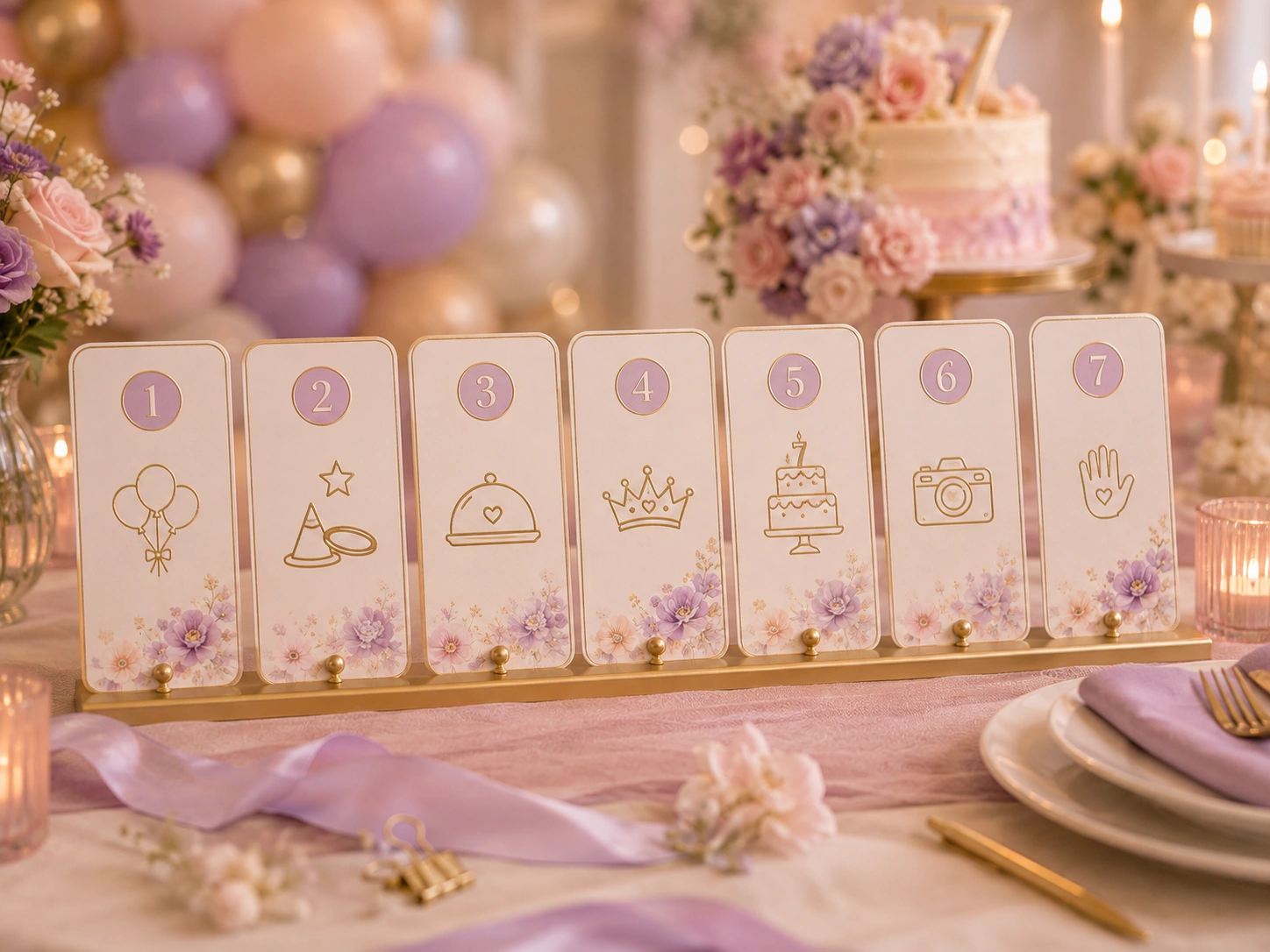
Use these as editable starting points. The host should know which activities can be shortened or skipped without disrupting the celebration.
Two-hour program
| 0:00–0:15 | Guest arrival, registration, and quiet welcome activity |
|---|---|
| 0:15–0:25 | Opening, short prayer or family welcome, and introduction |
| 0:25–0:45 | One active game or guided group activity |
| 0:45–1:05 | Optional “7” traditions or short messages |
| 1:05–1:30 | Meal or snack service |
| 1:30–1:45 | Birthday song, cake, and family photos |
| 1:45–2:00 | Thank-you message, giveaways, and closing |
Three-hour program
| 0:00–0:30 | Guest arrival, photo area, registration, and welcome activity |
|---|---|
| 0:30–0:45 | Opening, prayer or welcome, and introduction |
| 0:45–1:15 | Games, entertainment, or group activity |
| 1:15–1:45 | Meal service |
| 1:45–2:15 | Optional “7” traditions |
| 2:15–2:30 | Birthday song, cake, and family message |
| 2:30–2:45 | Photos with relatives, friends, and classmates |
| 2:45–3:00 | Giveaways, thank-you message, and closing |
Meaningful, not mandatory
What are the “7s” in a seventh-birthday party?
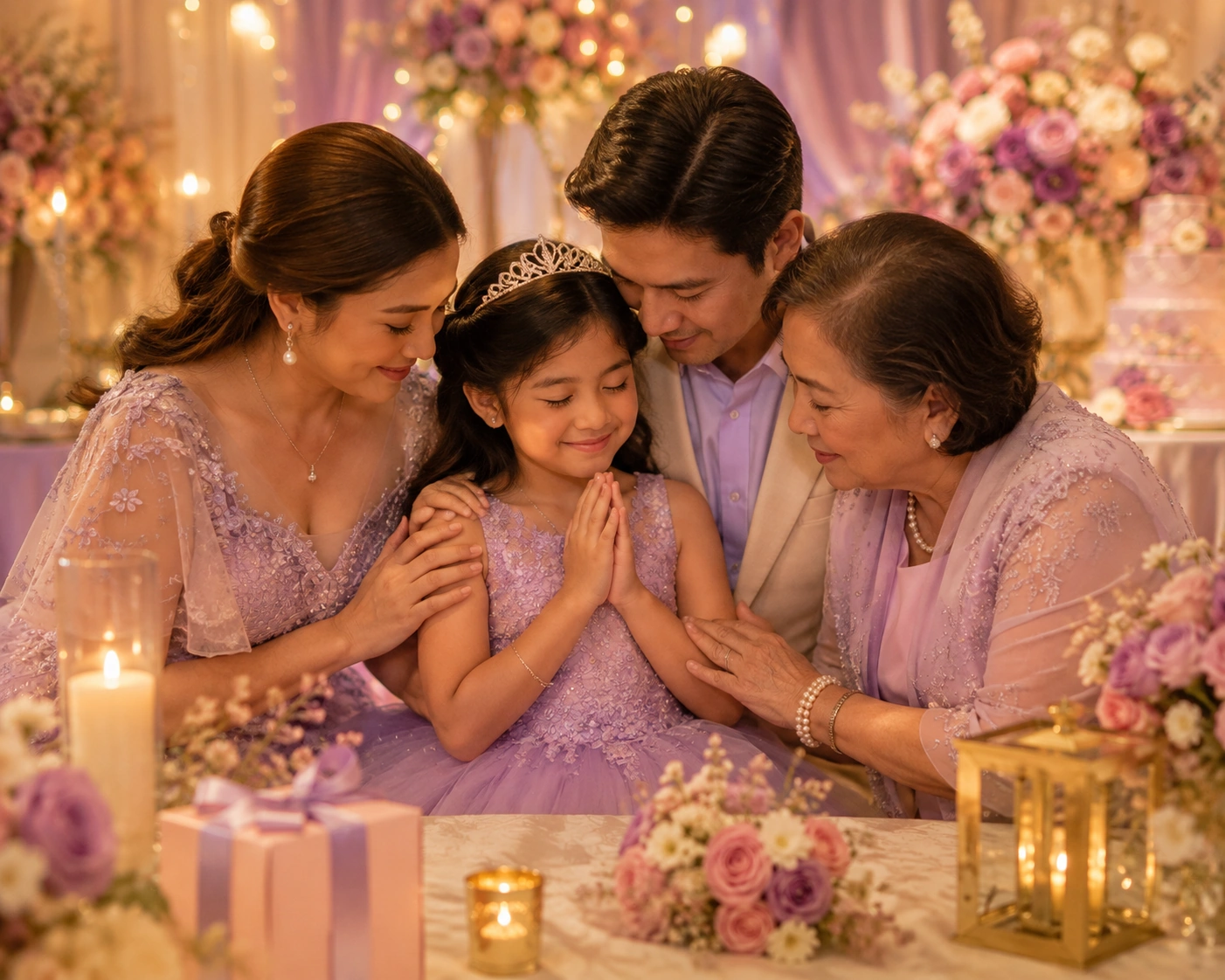
Filipino seventh-birthday programs often include a group of symbolic “7s,” but there is no single required list. Families can choose the traditions that fit the child, the people they want to honor, and the time available in the program. One or two meaningful segments can work better than forcing every tradition into the celebration.
| Tradition | Common idea | Planning note |
|---|---|---|
| 7 Candles or Wishes | Seven important people share a wish, blessing, or short message. | The candles may be held individually or arranged on a separate stand; cake candle-blowing can be a separate moment. |
| 7 Sweets or Chocolates | Seven sweets can represent affection, happy memories, or wishes for a joyful year ahead. | Keep the presentation simple and age-appropriate; the family can pair each sweet with a short message if they want. |
| 7 Gifts or Treasures | Seven meaningful gifts, keepsakes, or symbols are presented to the celebrant. | Choose people and gifts for their meaning rather than their price. |
| 7 Bills | Seven money gifts or envelopes can symbolize practical support and wishes for future prosperity. | Keep amounts private if preferred; a sealed envelope is enough for the ceremony. |
| 7 Roses or Dances | Seven loved ones share a short dance or present a rose as a sign of affection and support. | Participation does not need to follow gendered traditions; choose people the child is comfortable with. |
| 7 Balloons | Seven balloons can carry wishes, goals, memories, or messages. | Use an indoor display or message activity instead of releasing balloons outdoors. |
| Family-created tradition | Seven books, lessons, prayers, letters, favorite memories, or another family idea. | Customize the ritual around the child and your own family values. |
7 Candles or Wishes
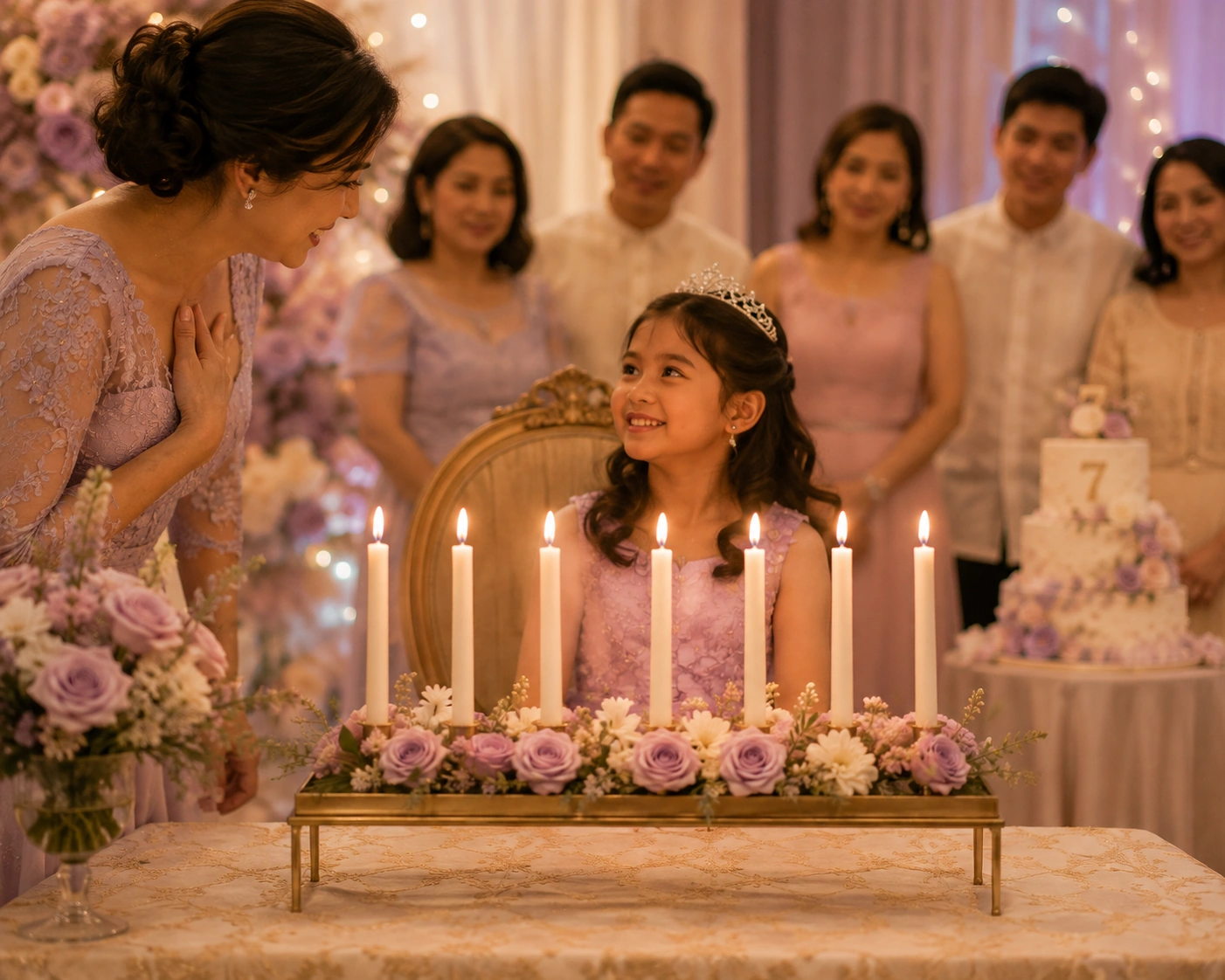
In many Filipino seventh-birthday programs, the “7 Candles” segment is really a wishes or blessings ceremony. Seven important people are invited one at a time to share a short message with the celebrant. Physical candles may be held by the participants or placed on a separate seven-candle stand.
The birthday cake does not have to carry all seven ceremonial candles. Many programs treat cake candle-blowing as a separate birthday moment. Families can also shorten the ceremony by asking each participant to keep the message brief.
7 Sweets or Chocolates
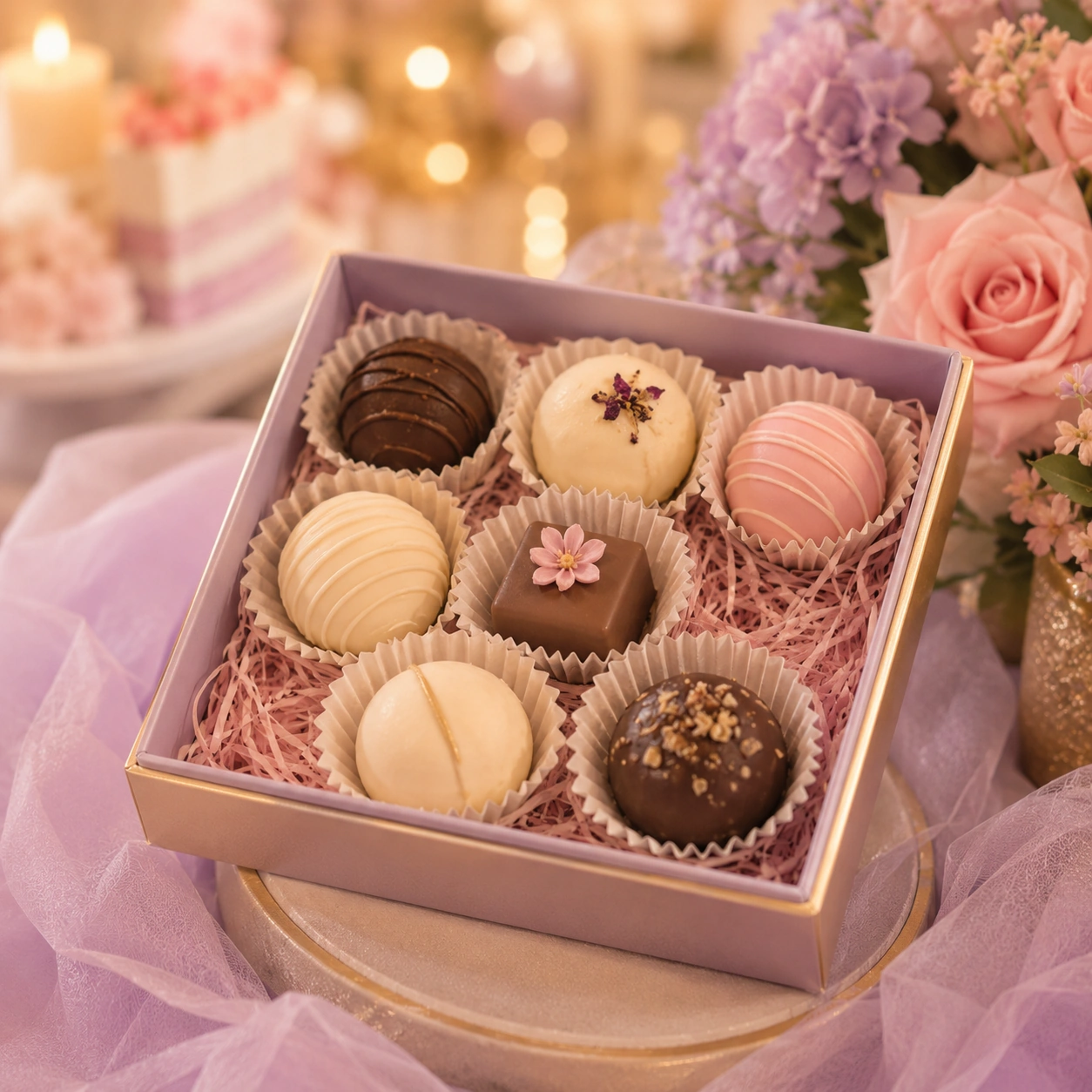
This child-friendly variation uses seven sweets, chocolates, cupcakes, or small treats as symbolic gifts. Families may invite seven people to give one item with a short message, or simply present seven treats together as part of the program.
Coordinate this segment with dessert service so it does not compete with the birthday cake or make the program unnecessarily long.
7 Gifts or Treasures
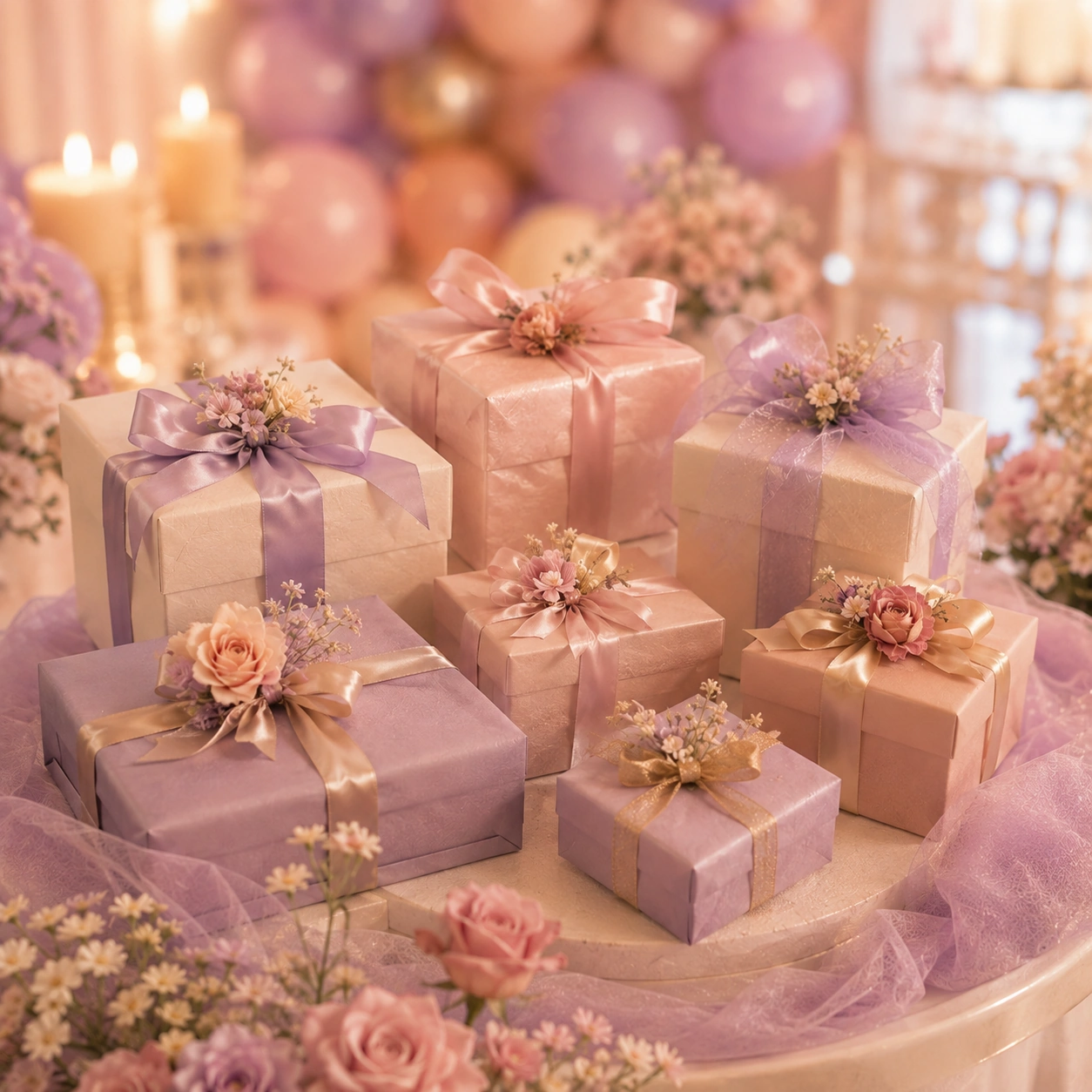
Seven people present a gift, keepsake, or small “treasure” chosen for its meaning to the child. The point is the relationship or message behind the gift, not the cost. A book, framed photo, letter, hobby item, family keepsake, or practical present can all work.
7 Bills
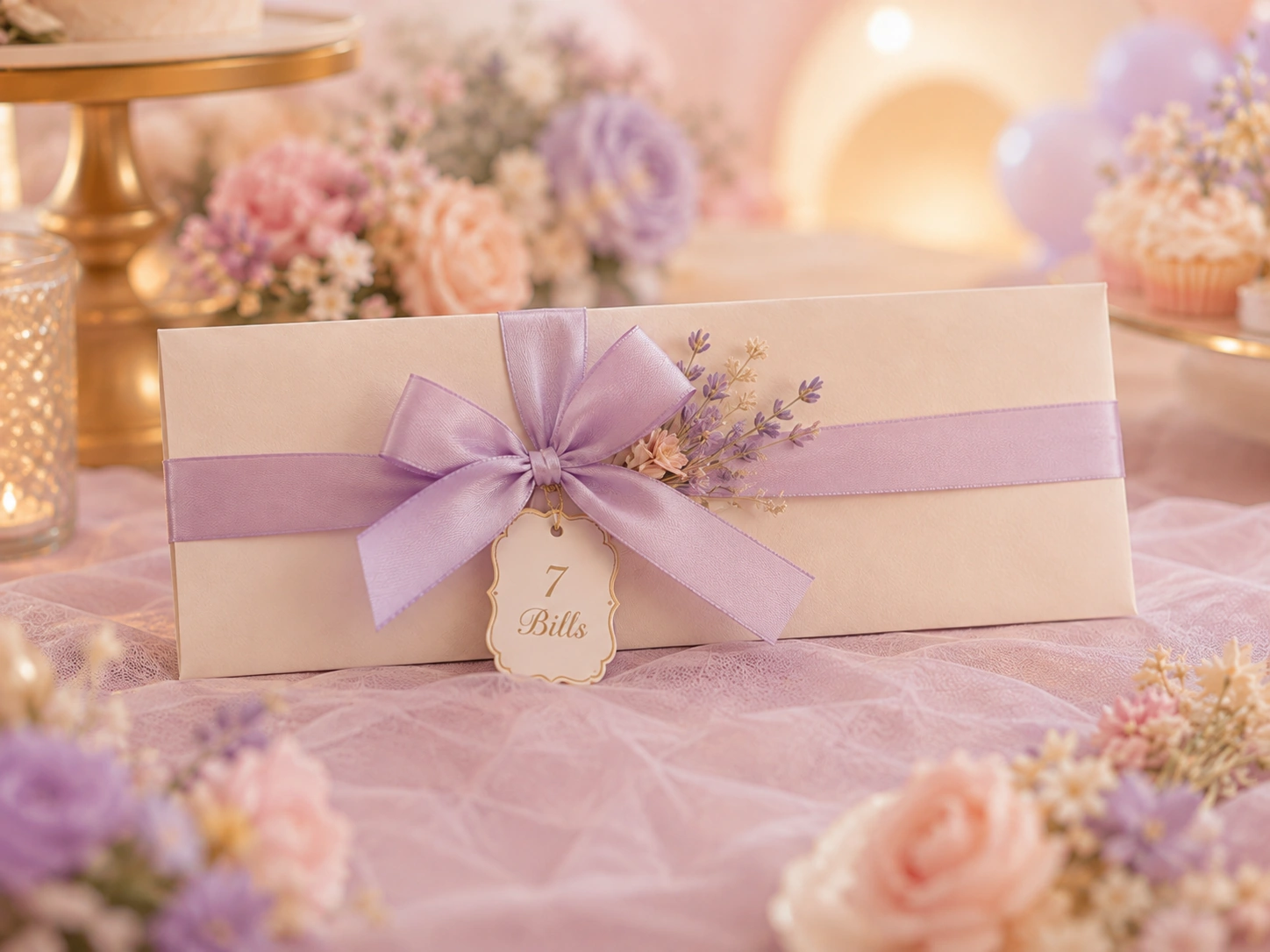
The 7 Bills tradition uses seven money gifts or envelopes as a practical symbol of support, provision, and good wishes for the child’s future. The amount does not need to be announced or displayed. A sealed envelope keeps the moment respectful and avoids turning the ceremony into a comparison of gifts.
7 Roses or Dances
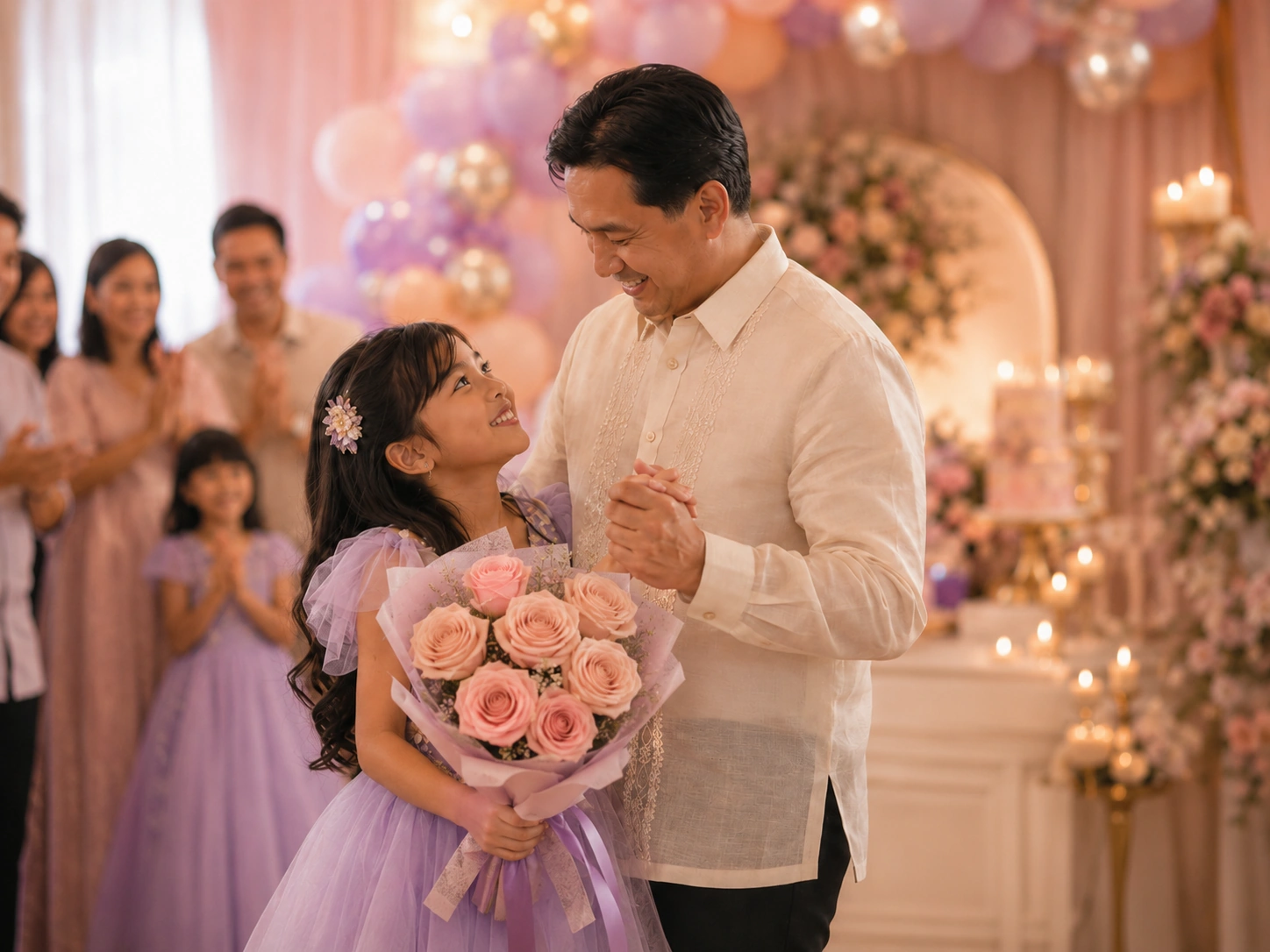
This tradition focuses on affection and connection. Seven chosen loved ones may each present a rose, share a short dance, or combine the two. Families can choose parents, grandparents, siblings, cousins, godparents, friends, or anyone important to the child.
There is no need to copy debut-style gender rules. Keep it comfortable, short, and appropriate for a seven-year-old.
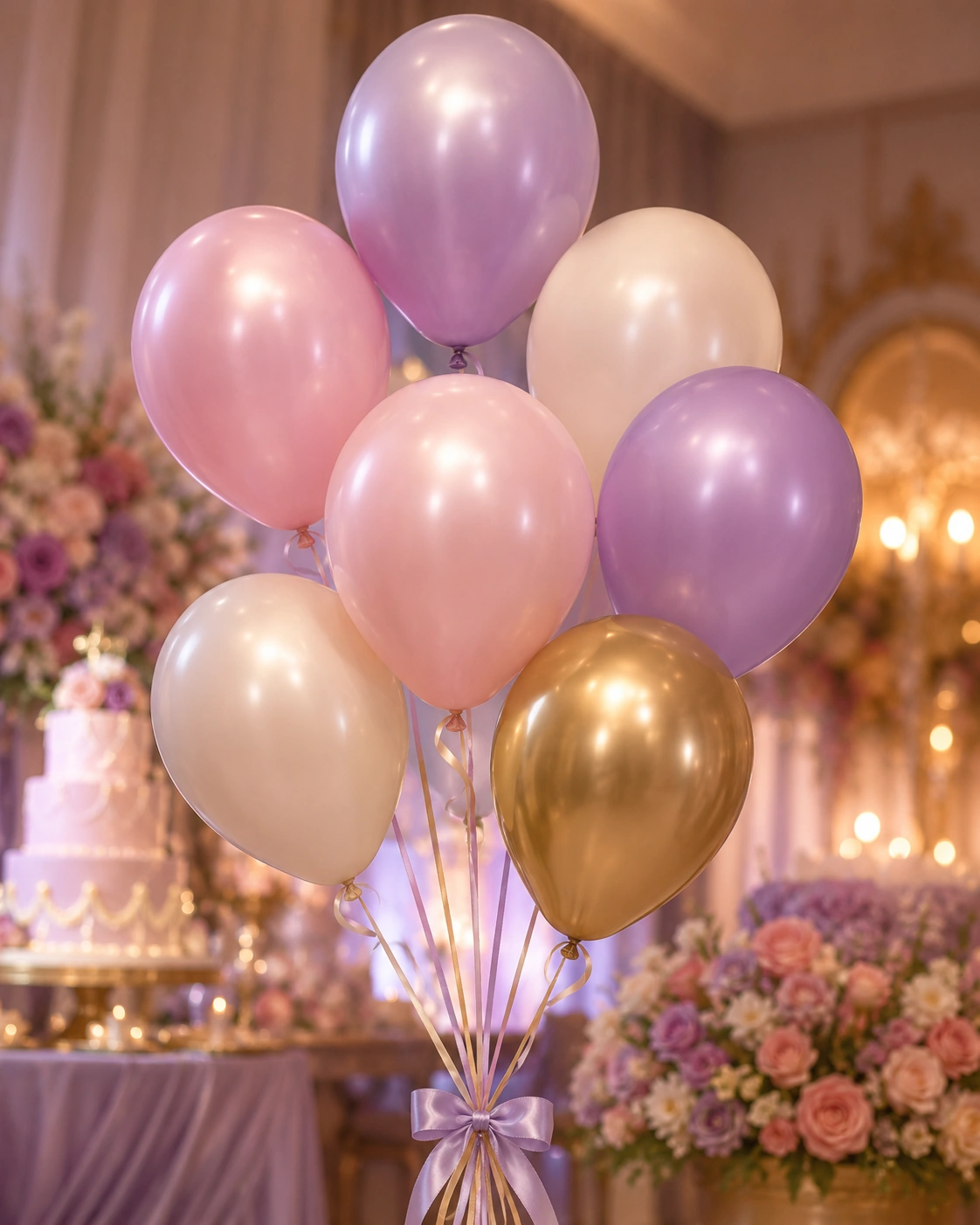
7 Balloons
Seven balloons can represent wishes, goals, memories, or messages from people close to the celebrant. They work best as an indoor display, photo moment, or message activity. Avoid balloon releases outdoors; the meaning of the tradition does not depend on releasing them.
Make the seventh tradition your family’s own
Some families use seven books or lessons, seven prayers, seven letters, seven favorite memories, or another ritual that reflects the child’s interests and family values. Treat these as flexible alternatives rather than a checklist of mandatory Filipino customs.
The best version is one the child understands and enjoys.
Interests before stereotypes
Theme ideas based on your child’s interests
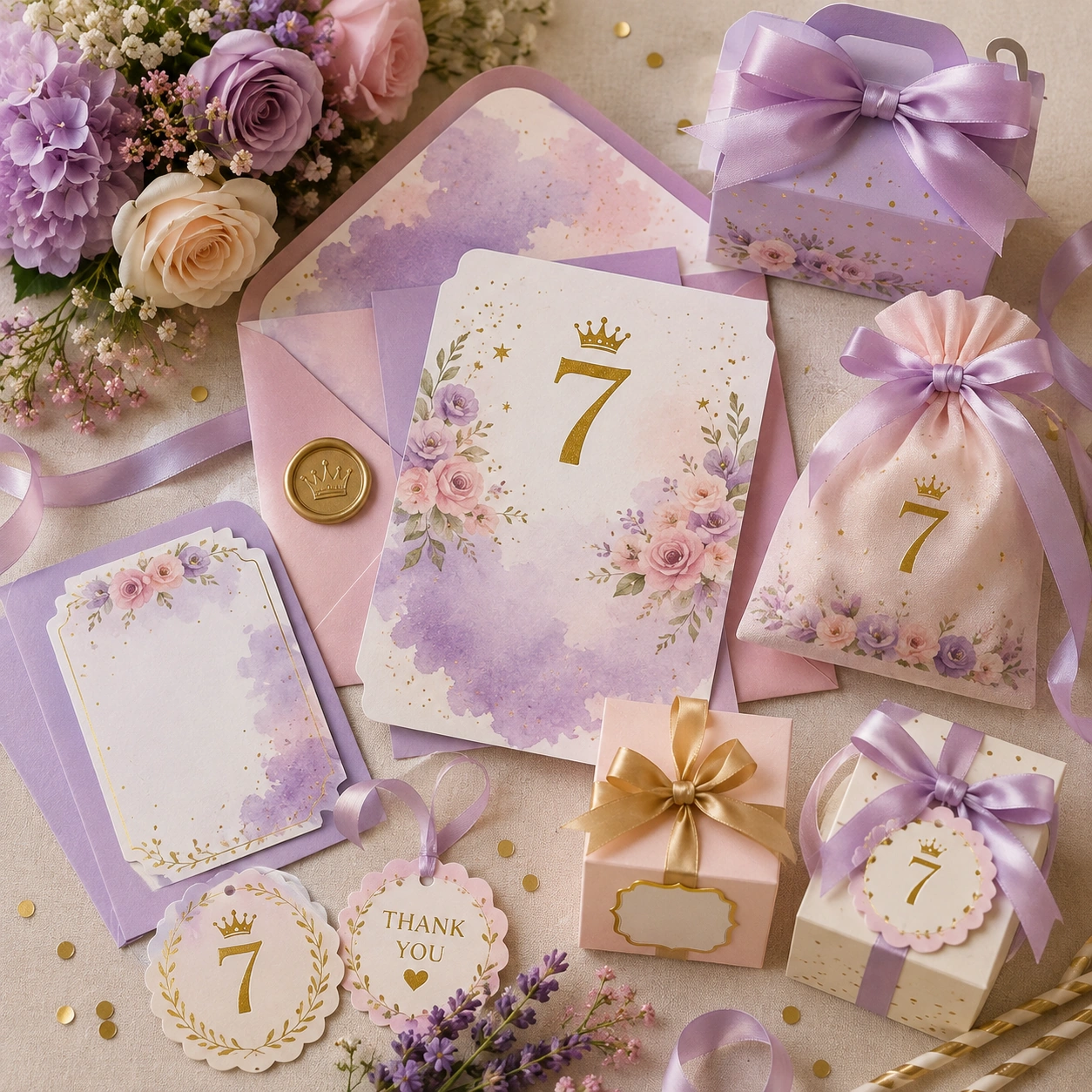
A theme is most useful when it helps unify the invitations, colors, activities, cake, and simple decorations. It does not need to control every item at the party.
Adventure and discovery
Maps, treasure hunts, clue-based games, travel tags, and explorer colors.
Art and making
Collaborative art, paper decorations, craft tables, and art-supply giveaways.
Sports and movement
Relay activities, obstacle courses, team colors, and comfortable open space.
Nature and animals
Botanical colors, animal footprints, nature trivia, and reusable decorations.
Music and performance
Karaoke, dance challenges, a small performance area, and a child-selected playlist.
Science and space
Supervised experiments, stars, planets, trivia, and activity stations.
Games and building
Puzzles, team missions, block-inspired shapes, and building challenges.
Storybook or fantasy-inspired
Original forest quests, magical libraries, sky kingdoms, or explorer stories without copying a branded franchise.
Count the real audience
Guest-list and budget decisions
The guest list affects food, seating, venue space, games, supervision, and program length.
Separate guests into children of similar age, younger children, parents who will remain, close relatives, adult family friends, teachers or godparents, and suppliers who may require meals.
Questions to ask
- Will parents stay during the party?
- Are younger siblings included?
- Does the venue have a firm capacity?
- Will all guests be seated at the same time?
- Will children and adults eat different menus?
- Does the activity have a participant limit?
Prioritize enough food, safe space, comfortable seating, reliable suppliers, clear coordination, and activities the child will enjoy. Simplify through fewer decorations, a shorter program, digital invitations, one organized game block, or fewer but more meaningful traditions.
Design the room around the program
Venue and layout checklist
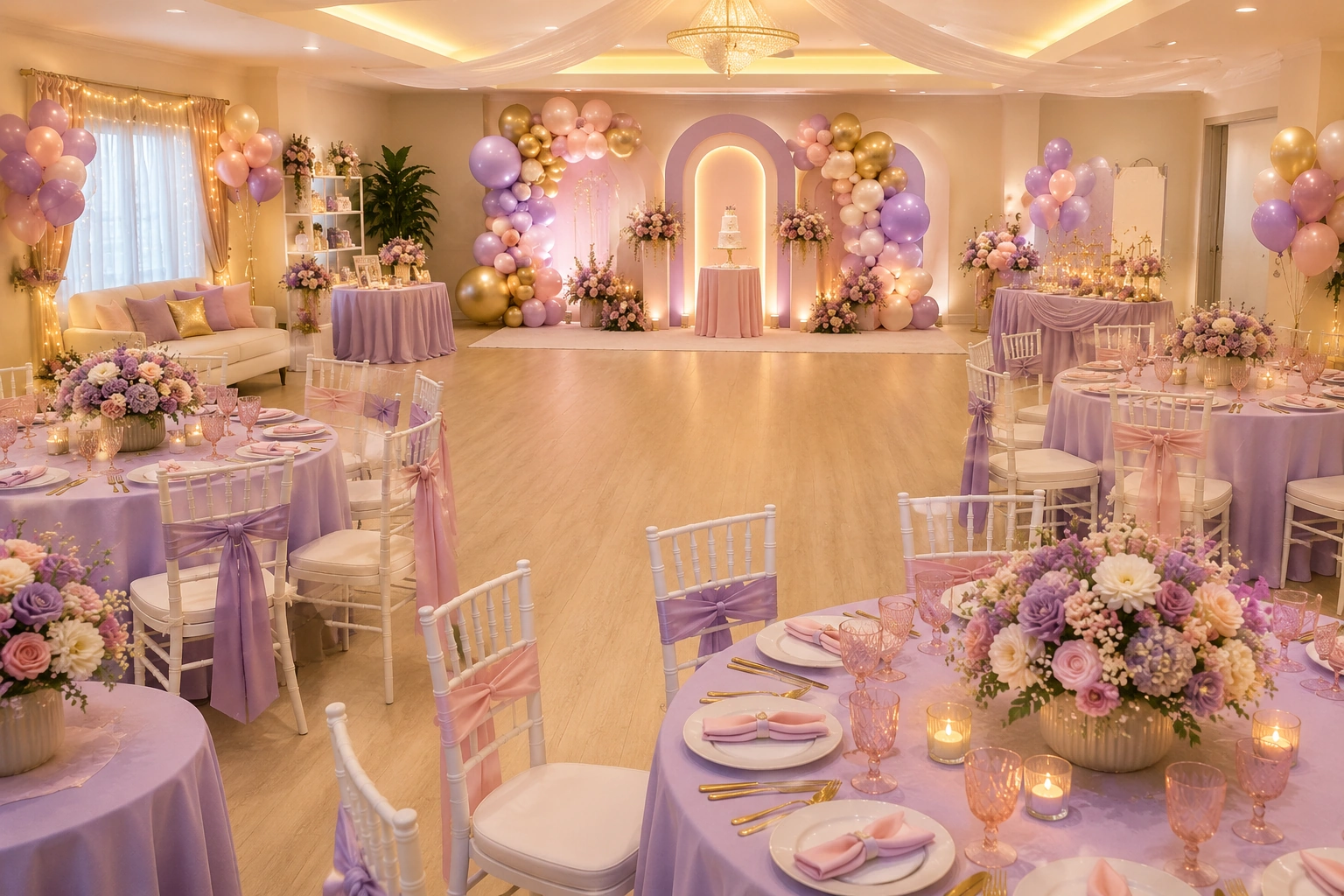
The best venue is not always the largest one. It should support the activities, guest count, food service, and level of supervision required.
Check before booking
- Maximum guest capacity
- Air-conditioning or ventilation
- Restroom access
- Parking and unloading
- Elevator or stair access
- Setup and cleanup windows
- Sound restrictions and outlets
- Food and catering rules
- Weather backup
Plan clear activity zones
- Guest arrival and gifts
- Children’s activity area
- Dining area
- Buffet or food-service area
- Cake and ceremonial area
- Gift and giveaway table
- Quiet or family area
Manage the energy
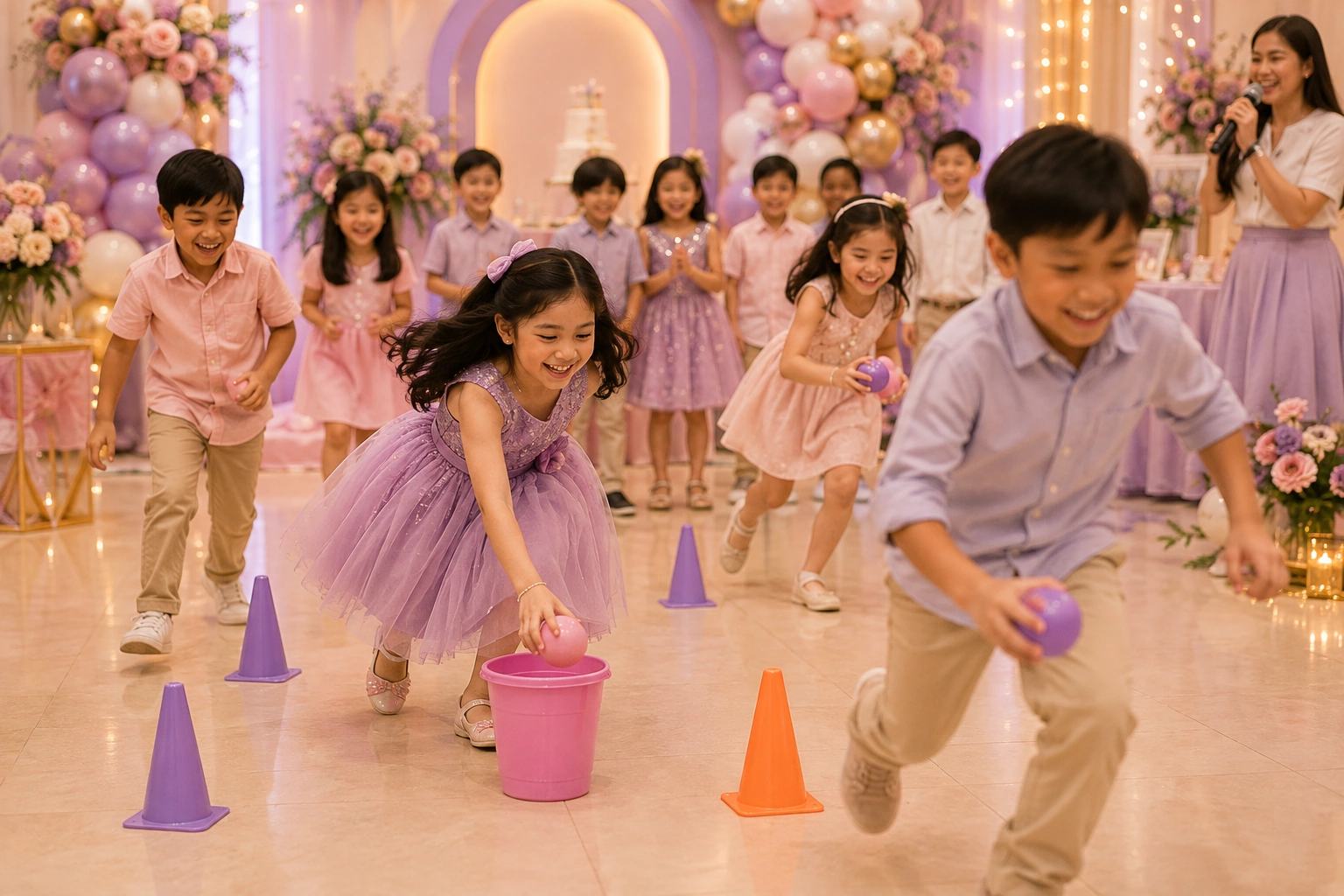
Plan the games around the child’s energy
Games should support the celebration rather than take over the whole program.
A balanced sequence may include one quiet arrival activity, one active group game, one team or parent-child activity, one calmer challenge, and time for conversation and photos.
Safety and inclusion
- Match games to the children’s ages.
- Avoid rough-contact activities.
- Keep floors and walkways clear.
- Prepare options for children who do not want to compete.
- Avoid embarrassing children in front of the group.
- Confirm supervision for active or outdoor games.
Choose games that fit the children’s ages, the space you have, the length of your party, and your group size.
Choose the right service format
Food planning for children and adults
Food planning becomes easier when you decide whether the event needs full catering and service, food trays only, or separate food arrangements for children and adults.
Kiddie Party Catering
Suitable when you need structured menu planning, a Kids’ Menu, an Adult Buffet Menu, and event-service coordination. Final details depend on your menu, guest count, venue, date, and requirements.
View Kiddie Party Catering packagesBirthday Food Trays
Suitable when the family or venue will receive, arrange, and serve the food without a complete catering team.
See the Birthday Party Food Tray GuideFood Trays Manila
Browse current dishes and Party Tray Sets, then ask us about availability and a quotation for your date.
Browse Food Trays ManilaAccount for every function
Tables, chairs, and setup needs
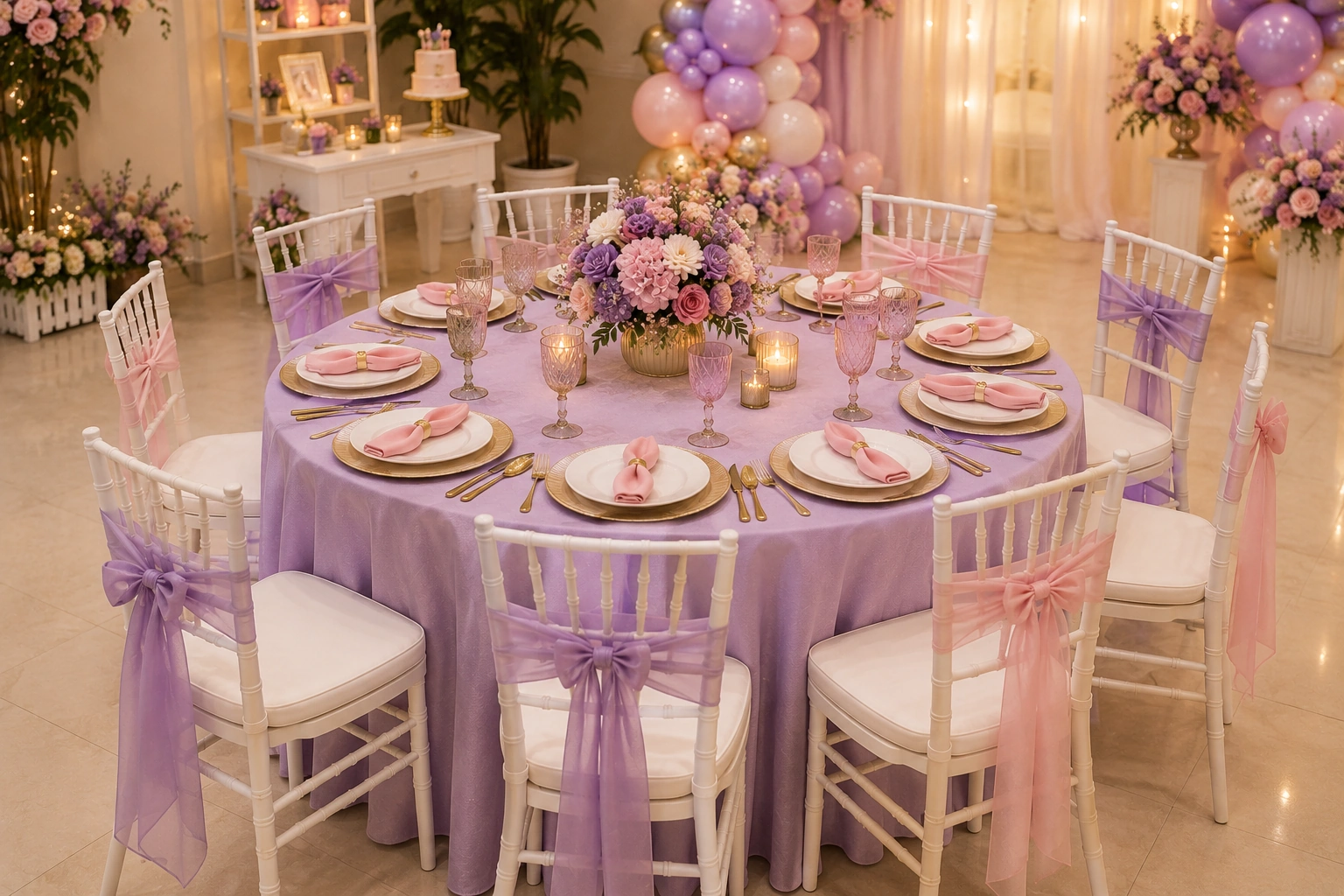
Prepare a list of the functions each table needs to support: children’s dining, adult dining, buffet service, cake display, gifts, giveaways, activity materials, registration, and supplier equipment.
Child-size or regular seating?
Child-size seating can make meals and activities more comfortable for younger guests. Regular seating may be more practical when children are older or when the venue already has suitable furniture.
Consider the children’s ages and heights, event duration, meal type, available floor space, and whether adults need to sit nearby.
View Kiddie Chairs and Tables RentalFor the final day
Event-day checklist
Program and coordination
- Final program saved or printed
- Host or family coordinator briefed
- Names of ceremonial participants confirmed
- Music and microphone checked
- Supplier contacts accessible
- Backup activity prepared
Food and service
- Final guest count confirmed
- Food delivery or catering schedule checked
- Drinking water available
- Serving tools and cake knife prepared
- Allergy information reviewed where provided
- Leftover-food containers available
Games and activities
- Props packed
- Prizes prepared
- Materials counted
- Floors and walkways kept clear
- Quiet activity available
- Adult supervision assigned
Child’s needs
- Main outfit and comfortable backup clothes
- Water and snack
- Medicines or personal requirements managed by the family
- Comfortable shoes
- A quiet place to rest if needed
Photos and memories
- Important family group list
- Cake and ceremonial photos planned
- Phone and camera batteries charged
- Messages or keepsakes collected
- Private information kept out of public photos
Closing and cleanup
- Giveaways distributed
- Gifts and belongings collected
- Supplier items returned
- Venue inspected
- Leftover food stored safely
- Remaining documents completed
Quick planning answers
Frequently asked questions
Many Filipino families treat turning seven as a meaningful childhood milestone. The exact reason and style of celebration vary by family. Some organize a larger party or symbolic program, while others prefer a simple meal with relatives and friends.
Common choices include 7 Candles or Wishes, 7 Gifts or Treasures, 7 Roses or Dances, 7 Sweets or Chocolates, 7 Bills, 7 Balloons, and a family-created tradition. The list varies by family; the 7 Candles segment is typically a wishes or blessings ceremony involving seven important people, and cake candle-blowing may be separate.
No. Include only the traditions that feel meaningful to your family and comfortable for the child. One short ceremonial activity may work better than a long sequence.
A simple party may last around two hours. A larger celebration with games, a full meal, traditions, cake, and photos may need about three hours. The final length should suit the child, venue, and guest count.
A simple home program may include guest arrival, a short welcome, one game, a few family wishes, the meal, cake, photos, and a thank-you message.
Choose food that is easy for children to eat while still providing suitable variety for adults. For full-service events, separate Kids’ Menu and Adult Buffet Menu planning may be helpful. For smaller celebrations, food trays may be sufficient.
Yes. A family meal, activity day, trip, classroom treat, or small gathering can still feel meaningful. The celebration should match the child and the family’s priorities.
Jojie’s offers Kiddie Party Catering Packages, Food Trays, and Kiddie Chairs and Tables Rental. Availability and final arrangements depend on the event date, location, guest count, menu, schedule, and requirements.
What do you need help with?