
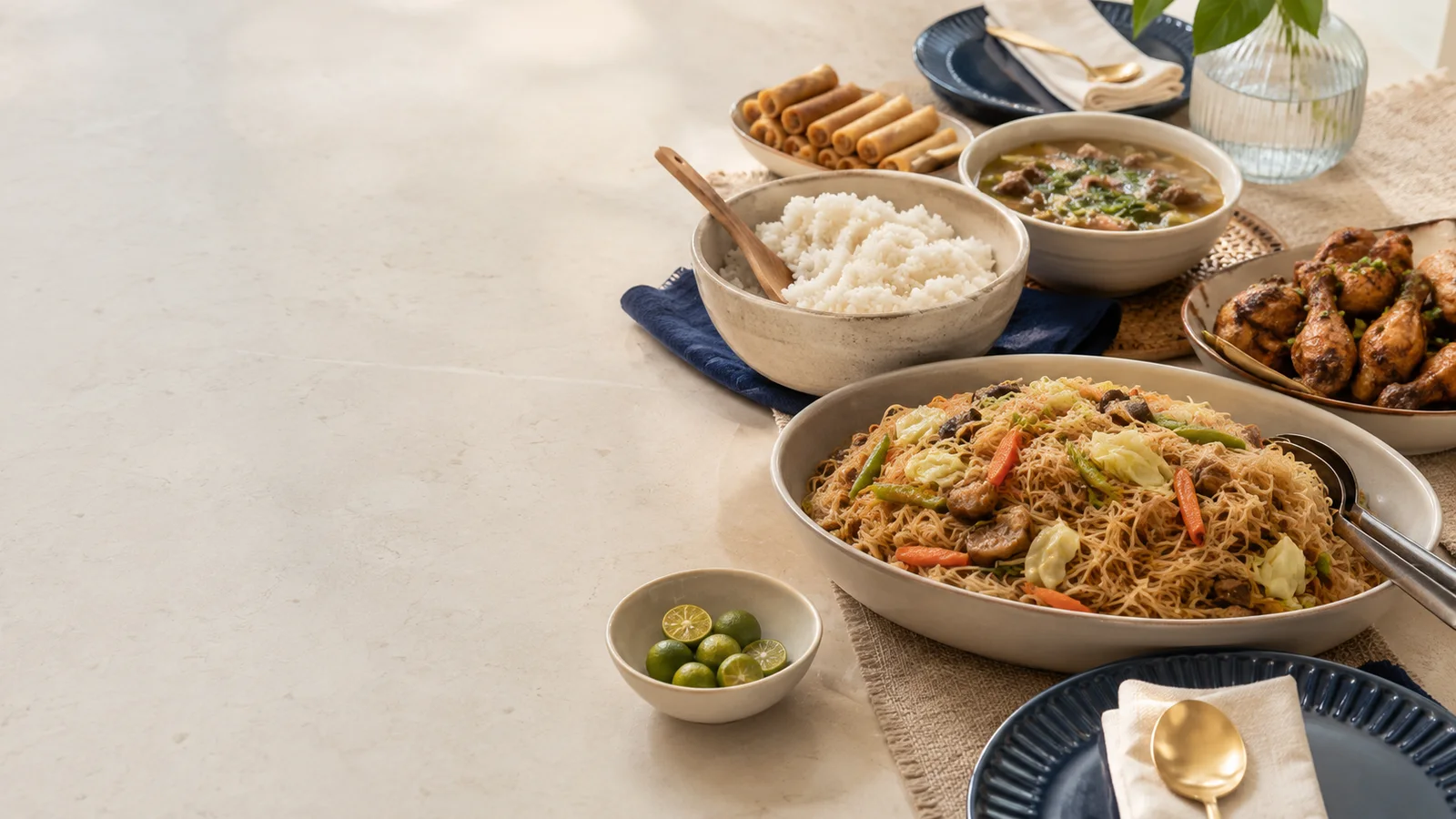
Plan Your Pancit Order
Pancit Guides for Parties, Office Meals and Family Gatherings
Choosing pancit is easy. Choosing the right noodle, tray quantity and place for it in the menu takes a little more planning.
Use this hub to compare Jojie’s pancit and noodle choices, estimate how much to order and build a balanced spread for a birthday, office merienda, family salusalo or larger shared meal.
Quick Answer
Start With What You Need Help With
How to Use These Guides
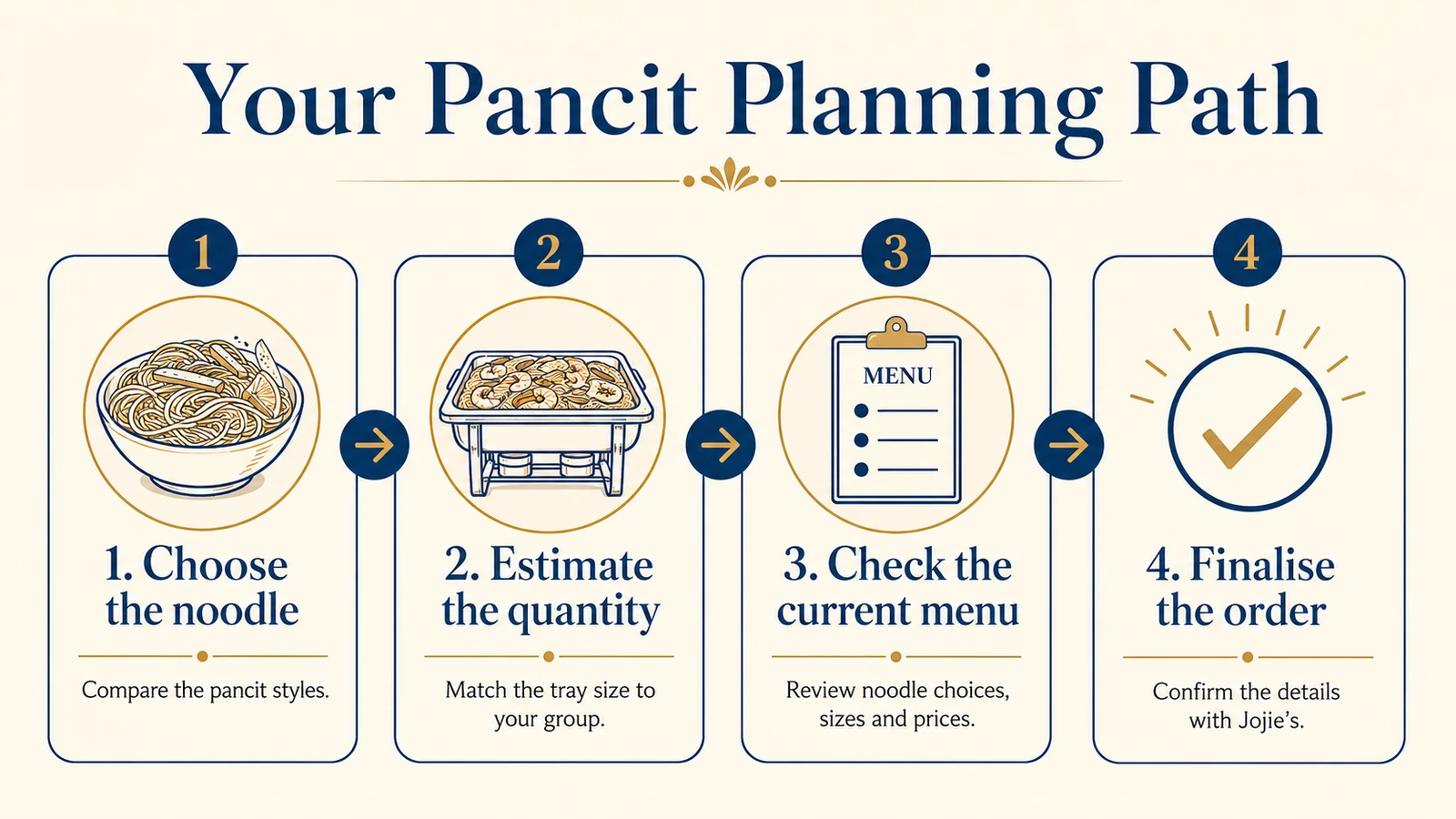
Three Simple Steps to Plan Your Pancit Order
Start by choosing the noodle that suits your meal, estimate how much your group is likely to eat, and then check the current tray sizes and prices before ordering.
Choose the noodle that suits the meal
Think about the rest of your menu, the kind of gathering you are planning and the noodle textures your guests already enjoy.
Estimate how much your group will eat
Use Jojie’s current 4-, 12- and 25-person tray sizes as your starting point, then adjust for the rest of the food on the table.
Check the current menu and prices
Once you have chosen the noodle and estimated the quantity, visit the dedicated Pancit page for current tray sizes, prices and ordering details.
Choose the noodle, estimate the tray quantity, then check the current menu and prices before placing your order.
Choose Your Starting Point
What Do You Need Help With?
These two guides answer different questions. Start with the one that gives you the help you need right now.
Choose the noodle
Pancit Bihon vs Canton vs Sotanghon
Compare fine Bihon strands, plump golden Canton noodles and silky translucent Sotanghon. See how each one fits beside rice, appetizers and richer viands.
- Texture and appearance
- Birthday and office-meal examples
- Bihon vs Canton and Sotanghon vs Bihon answers
- Other Jojie’s noodle choices
Choose the quantity
How Much Pancit Should You Order?
Estimate the number of guests likely to take pancit, decide whether it is the main food or an additional dish and build a tray combination from Jojie’s current serving sizes.
- Examples for 10, 20, 30, 50 and more guests
- Rice, children and menu-variety adjustments
- Interactive starting-quantity estimator
- Party-tray planning checklist
Plan in the Right Order
Choose the Menu First, the Noodle Second and the Tray Size Last
This simple order prevents two common mistakes: choosing a noodle that clashes with the rest of the spread and ordering enough pancit for every guest even when rice and several other dishes are already available.
Look at the whole menu
Decide whether pancit will be the main starch, a filling merienda or one familiar choice beside rice and viands.
Choose the noodle style
Match the texture and richness of the noodle to the occasion, the other dishes and the preferences of your guests.
Match the tray quantity
Count likely pancit eaters, then choose the most suitable combination of Jojie’s 4-, 12- and 25-person trays based on whether pancit is the main food or one of several dishes.
Seven Current Choices
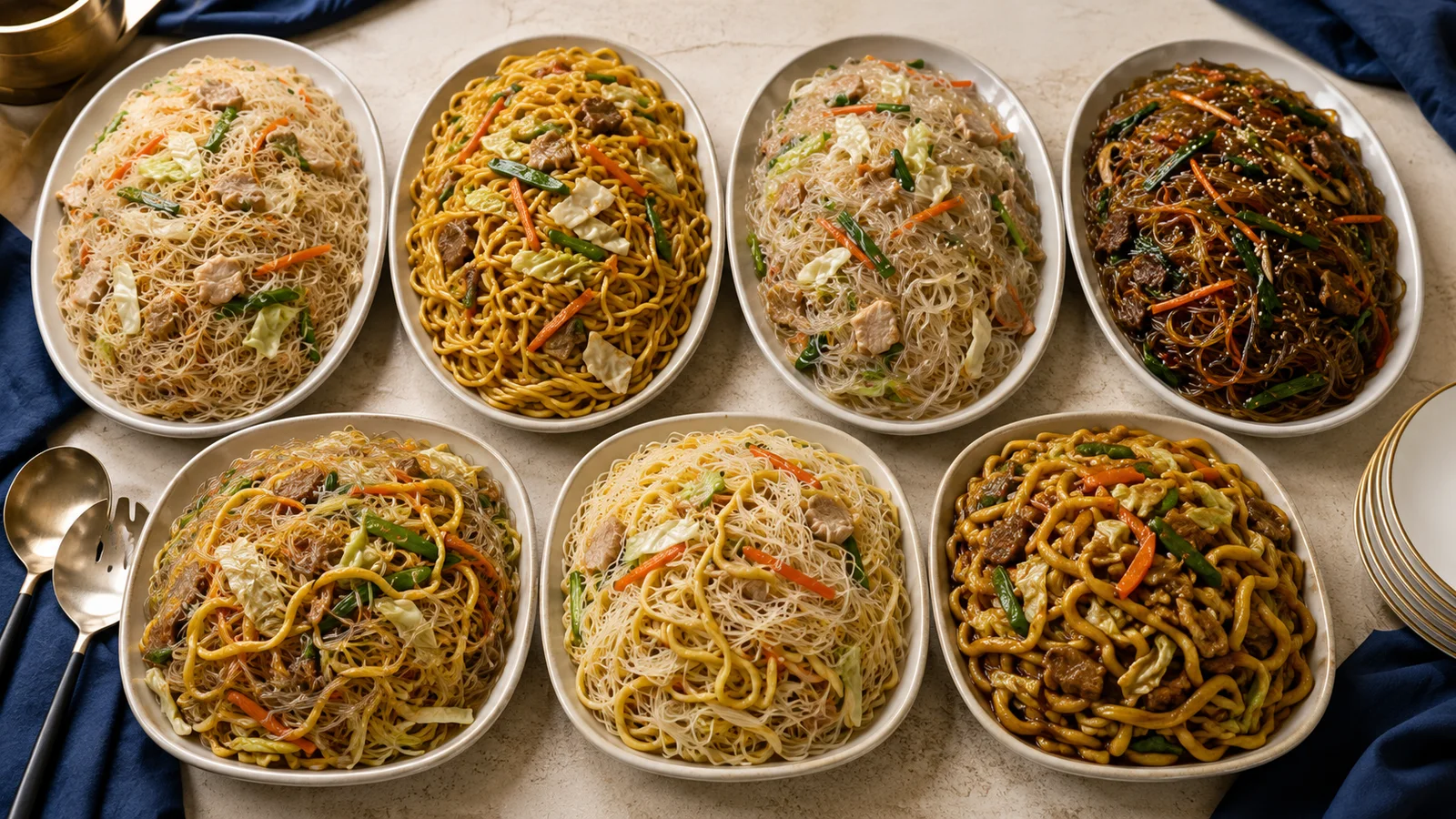
Pancit and Noodle Choices on Jojie’s Current Menu
Jojie’s menu ranges from fine, familiar rice noodles to thicker, saucier preparations and mixed-noodle trays. The comparison guide focuses first on Bihon, Canton and Sotanghon because they provide the clearest starting point for understanding the differences.
The other four choices give you more ways to add texture, color and variety to a party or office spread.
Pancit Bihon
Fine, pale rice strands with a light, delicate texture that sits comfortably beside rice and richer viands.
Pancit Canton
Plump, golden noodles with a firmer, heartier bite when pancit needs a stronger presence on the table.
Sotanghon
Silky, translucent glass noodles with a smooth, lightly springy texture and a visibly different finish.
Korean Sotanghon (Japchae)
Darker, glossy Korean glass noodles for guests who want a distinct alternative to traditional Filipino pancit.
Mixed Sotanghon Canton
A combination of translucent glass noodles and golden Canton noodles in one shared tray.
Miki-Bihon
Thicker yellow Miki noodles mixed with fine Bihon for contrasting noodle textures in every serving.
Chami
Thicker, softer and saucier noodles that create a richer, more comforting eating experience.
Compare Bihon, Canton, Sotanghon and the other noodle choices →
Plan Around the Occasion
How Pancit Fits Into Different Party and Group Menus
The best pancit for a party is the one that supports the rest of the food. These examples are starting points, not fixed rules.
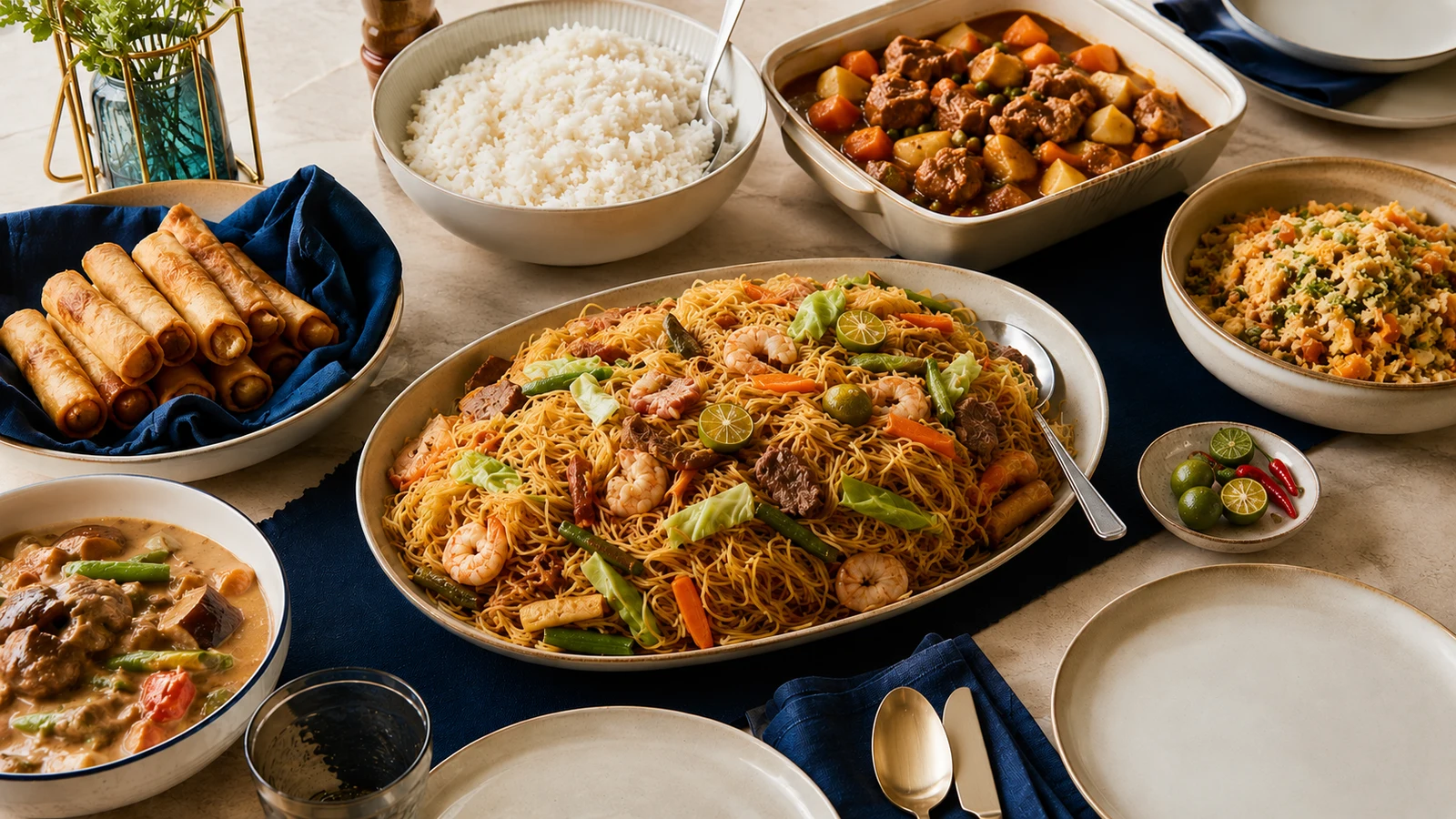
Birthday party
Rice, appetizers and several viands
A fine, familiar noodle such as Bihon can add color and savory flavor without making the spread feel overly heavy. Order the tray as one part of the complete birthday menu.
Office merienda
Pancit is one of the main foods
Thicker Canton or a more substantial mixed-noodle dish can feel satisfying when guests are not also building a full rice-and-viand plate.
Family salusalo
Familiar favorites for mixed ages
Choose a noodle the family already enjoys, then add a tray size that leaves room for rice, meat dishes, vegetables and dessert.
Larger buffet
Pancit adds variety to many choices
When several starches and viands are available, not every guest needs a full noodle serving. The listed tray capacity may stretch further when noodles are one choice among many.
Build a Balanced Spread
What Goes Well With Pancit?
Pancit works best when the rest of the menu gives guests contrast in texture, richness and freshness.
Crisp appetizers
Lumpiang Shanghai and other crisp starters add crunch beside soft, savory noodles.
Chicken or pork dishes
A familiar meat viand gives the meal more substance when pancit is not intended to carry the entire plate.
Vegetable dishes
Fresh or lightly cooked vegetables bring color and balance beside richer sauces and fried appetizers.
Rice, when appropriate
Rice is useful for a full Filipino meal, but it also reduces the amount of pancit most guests are likely to take.
Pancit Tray Planning
Pancit Tray, Party Tray or Food Tray?
Choose a ready-to-share pancit tray for a household, party, office meal or group gathering. Compare the noodle choices here, then check the dedicated Pancit page for current tray sizes, prices and ordering details.
Jojie’s dedicated Pancit page shows the available choices, serving sizes and tray prices from the same catalogue used by Food Trays Manila. Use these guides to choose and plan, then visit the commercial Pancit page to order.
Before requesting a pancit order
- Event date and expected eating time
- Preferred pancit or noodle choice
- Estimated number of pancit eaters
- Other starches and filling dishes
- Pickup or courier details
Avoid Common Planning Problems
Pancit Menu Mistakes That Lead to Too Much Food or an Unbalanced Spread
Most pancit-ordering problems are not caused by the noodle itself. They happen when the tray is planned without looking at the rest of the meal.
Ordering for the full attendance automatically
Not every guest will take a full serving when rice, appetizers, viands and dessert are also available. Estimate likely pancit eaters and decide whether pancit is the main food or one of several dishes.
Choosing two similar starches
A thick noodle beside another heavy pasta can make the table feel repetitive. Use Bihon or Sotanghon when you want a finer or more translucent contrast.
Treating every event like a full buffet
An office merienda, children’s birthday and family dinner create different appetites. Let the occasion guide both the noodle and the quantity.
Ignoring the guests who will actually eat
Children, older relatives, staff and suppliers can change the estimate. Guest preference is often more useful than a generic rule about the “best” pancit.
Checking prices before settling on the menu
Start with the meal structure, then compare the current tray choices and prices. A smaller tray that suits the menu may be more useful than a larger tray chosen only because it serves more people.
Forgetting the receiving and serving plan
Know who will receive the food, where the trays will be placed and when guests will eat. A practical serving plan keeps the noodles easier to share and the table less crowded.
A Better Way to Decide
Use Guest Preference as the Final Check
Texture, menu balance and tray quantity are useful planning tools, but the people at the table still matter most. A familiar Bihon may be the better choice when your family or team prefers traditional flavors. Canton can suit guests who want a fuller merienda, while Sotanghon or Korean Sotanghon (Japchae) may appeal to a group that already enjoys glass noodles.
For mixed-age gatherings, choose at least one familiar dish elsewhere in the menu even when you select a less familiar noodle. This gives cautious eaters another comfortable option without forcing every dish to be predictable.
Use these questions before deciding
- Which pancit does the family or team usually enjoy?
- Will guests eat a full meal or only merienda?
- Are rice and other starches already included?
- Does the menu need a lighter or heartier noodle?
- Would one mixed-noodle tray satisfy different preferences?
Pancit Guide FAQ
Common Questions Before Choosing a Pancit Tray
What is the best pancit for a birthday party?
There is no single best choice for every birthday. Bihon is a familiar option for a full rice-and-viand menu, while Canton may feel more substantial when pancit is one of the main foods. Guest preference should still guide the final choice.
How do I choose between Bihon, Canton and Sotanghon?
Choose Bihon for fine, delicate strands, Canton for a firmer and heartier bite, or Sotanghon for silky translucent noodles and a distinct texture. The full comparison guide explains how each fits into different menus.
How much pancit should I order per person?
Start with Jojie’s current 4-, 12- and 25-person tray sizes, then adjust according to whether pancit is the main food, whether rice is served and how many other filling dishes are available. Use the quantity guide for worked examples.
Does Jojie’s have Korean Sotanghon or Japchae?
Yes. The customer-facing menu name used in these guides is Korean Sotanghon (Japchae), which keeps the familiar Philippine term while identifying the Korean glass-noodle dish.
Where can I check the current pancit tray price?
Use the dedicated Pancit menu for current noodle choices, serving sizes, tray prices and ordering details. Its operational data is synchronized with Food Trays Manila.
Choose the Next Guide
Start With the Question You Need Answered
Still choosing the noodle? Begin with the comparison guide. Already know what you want? Use the quantity guide to estimate the tray combination that fits the rest of your menu.