


A practical birthday guide for parents
Kids Birthday Party Planning Guide for Metro Manila
Plan around your child, the guest mix and the amount of work your family can realistically handle—not around a one-size-fits-all party formula.

The main idea
Age matters, but it is not the only thing that matters
Two children of the same age can want completely different celebrations. Use age as a practical planning clue for pace, guest mix, supervision and activity complexity, then adjust for your child’s interests, temperament and the people actually attending.
The goal is not to fill every minute. A good plan gives the child a few moments to look forward to, gives adults clear responsibilities, and keeps food, seating and activities workable in the space you have.
Age-fit planning
Use broad age bands as planning prompts, not rigid rules
For younger children, simpler activities, shorter transitions and more visible adult support usually make the plan easier to manage. As children get older, they can often have more say in the guest list, theme, activities and how structured the program feels.
What matters most is whether the plan fits the child and the group. A quiet craft activity may be better than a high-energy game for one child; another may want the opposite.
1–3 years
Keep the celebration simple. Think about familiar adults, comfortable space, meal and nap routines, and an easy exit if the child gets tired.
4–6 years
Plan a few clear activities with room for free play. Keep instructions simple and make sure adults can see where children are gathering.
Age 7
Treat this as a specialist milestone rather than duplicating a generic checklist. Use the dedicated 7th Birthday Checklist.
8–10 years
Let the child help shape the guest list and activities. One or two stronger activity ideas can be more memorable than a long program.
11 years and up
Ask how much they actually want a traditional children’s party. A meal, activity-centered gathering or smaller celebration may fit better.
Before you confirm
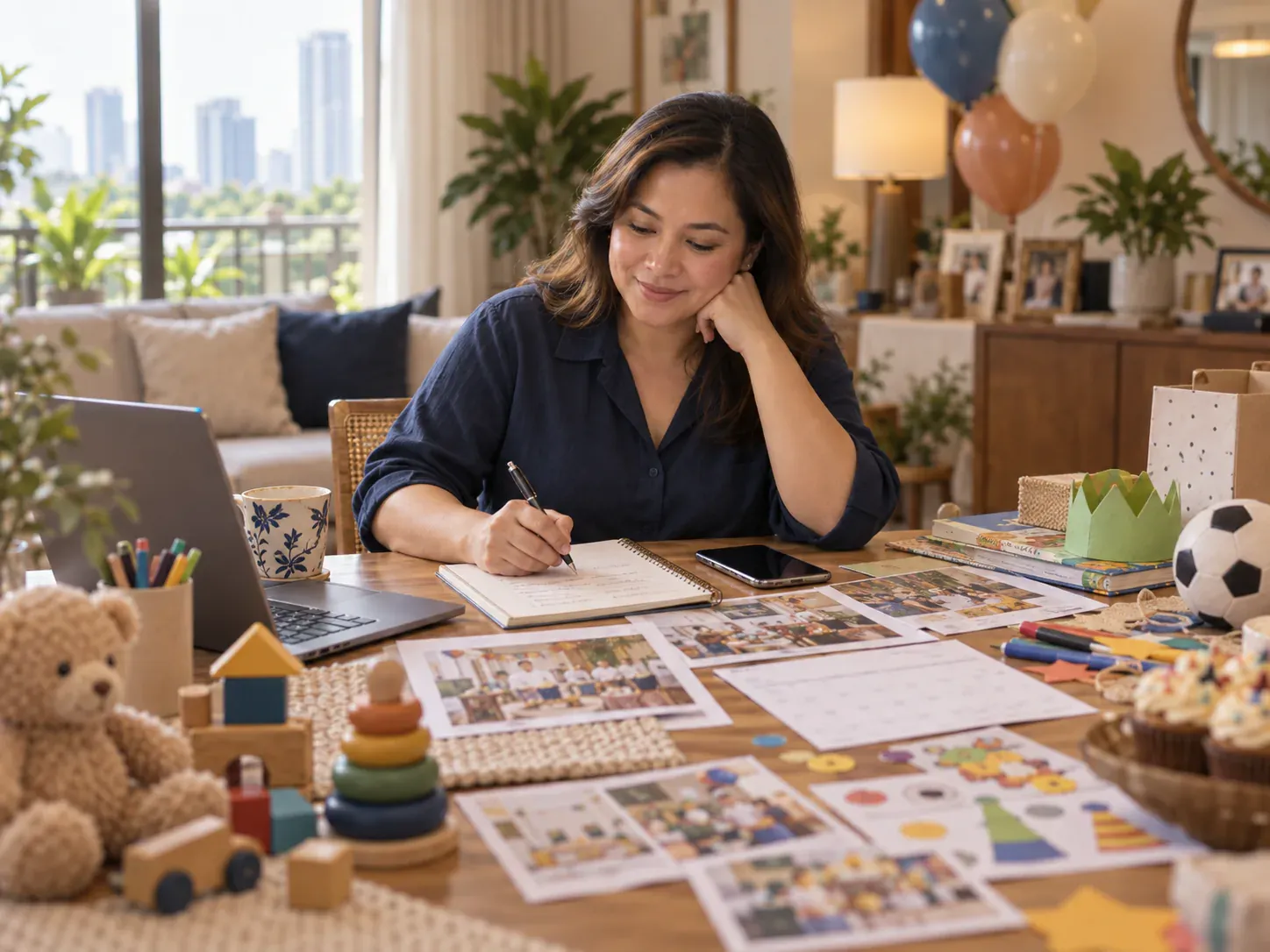
Kids birthday party master checklist
- Ask the child what matters most
Start with interests, favorite activities and the kind of celebration the child will actually enjoy.
- Set a working budget
Keep one total limit visible before choosing a venue, styling, food, entertainment or rentals.
- Build a guest-count range
Separate children and accompanying adults so seating, food and supervision needs are easier to see.
- Choose the party format
Decide whether the celebration will be at home, at school where permitted, or in a private venue.
- Match activities to age, space and energy
Choose a few things children can enjoy safely rather than filling every minute with a program.
- Plan food for the actual guest mix
Account for children and adults, serving space, meal timing and dietary information shared by guests.
- Confirm tables, chairs and setup needs
Check what the location already provides before adding rentals or extra equipment.
- Send invitations and collect replies
Make it clear who is invited and update the working headcount as families respond.
- Assign adult responsibilities
Name the people handling receiving, food, children’s activities, photos, cake and cleanup.
- Reconfirm the final plan
Review headcount, venue access, food, activity materials and responsibilities before the celebration.
Venue and guest mix
Count the adults as part of the party plan
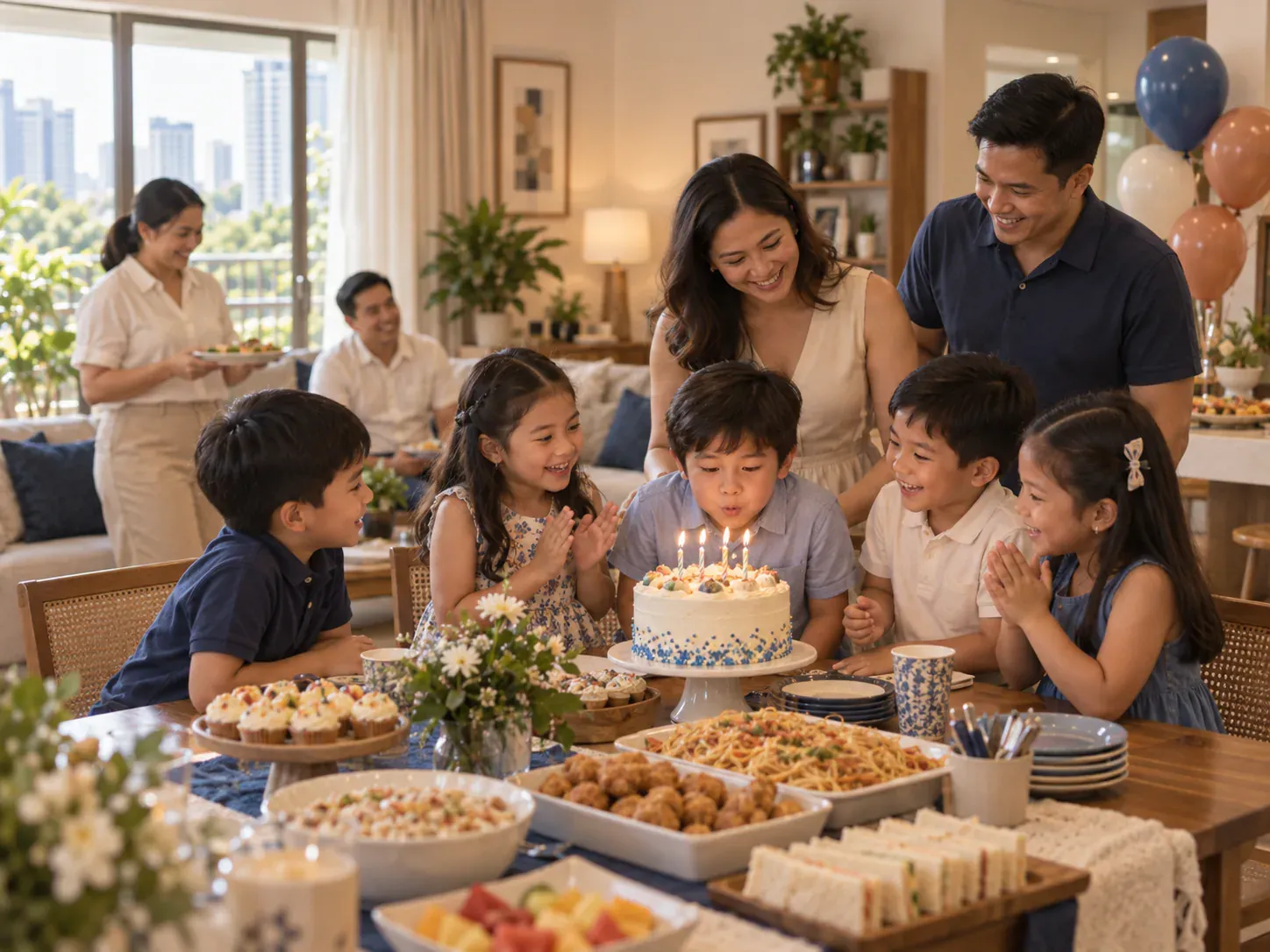
A children’s guest list rarely means children only. Younger guests may arrive with parents or guardians, and relatives may stay for the meal. Separate the likely number of children from accompanying adults so seating, food and space are easier to judge.
At home, check the real usable space after furniture, serving tables and activity areas are considered. In a venue, ask what is actually included, how early setup can begin, and whether there are rules that affect food, decorations, noise or children’s activities.
If you are considering a school celebration, confirm the school’s current rules directly before ordering food, bringing decorations or planning an activity. Policies vary and should not be assumed from another school’s setup.
At home or in a venue?
Choose the place that makes the party easier to run
At home
Can work well for a smaller guest list when the family is comfortable handling setup, receiving, serving and cleanup. Protect enough open space for children to move without turning every room into part of the event.
Private venue
Can reduce space pressure and separate the celebration from household cleanup, but confirm access time, inclusions, restrictions and the actual usable layout before committing.
Food and program
Plan food for children and adults, then keep the program proportionate
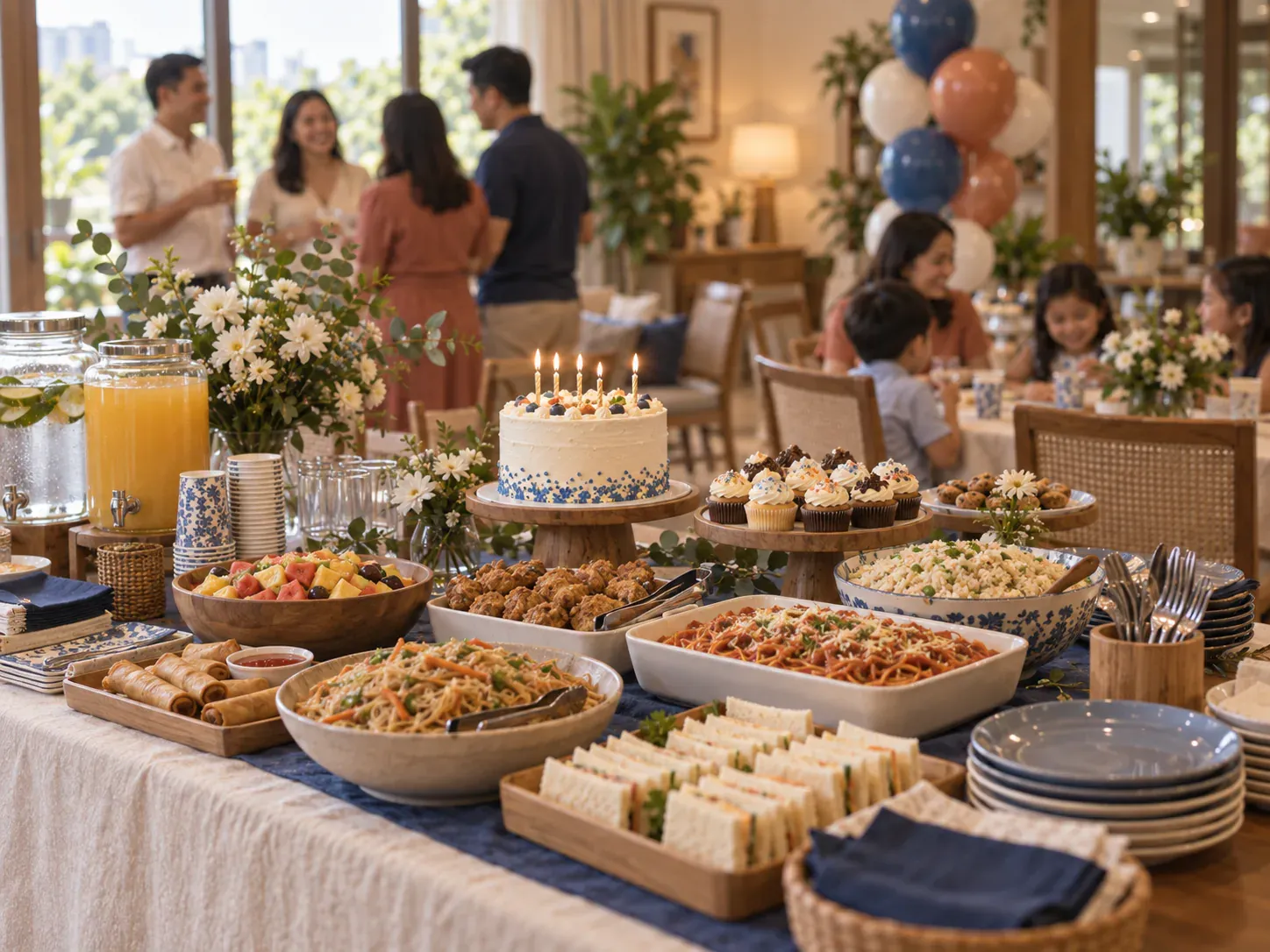
Start with the guest mix and meal timing. A party built around lunch or dinner needs a different food plan from an afternoon celebration with lighter eating. Think about how food will be served, where people will sit, and how easily adults can help younger children when needed.
Ask invited families to share relevant dietary information directly with you. That information helps with planning, but it should not be turned into a medical guarantee or an assumption that one menu works for every guest.
For a simpler gathering, prepared food trays can reduce cooking work when the family is comfortable handling the serving setup. If the event needs a more complete staffed format for a children's celebration, compare kiddie party catering or Jojie's broader full-service catering.
For dedicated menu ideas for children and the adults attending with them, see Kids Birthday Party Food Ideas.
Prepared food only
Browse Food Trays and Party Trays when the family already has the venue, tables and serving plan.
Full-service format
Compare full-service catering when you want a more complete event-service setup.
Activities
Choose a few activities that fit the child, the room and the group
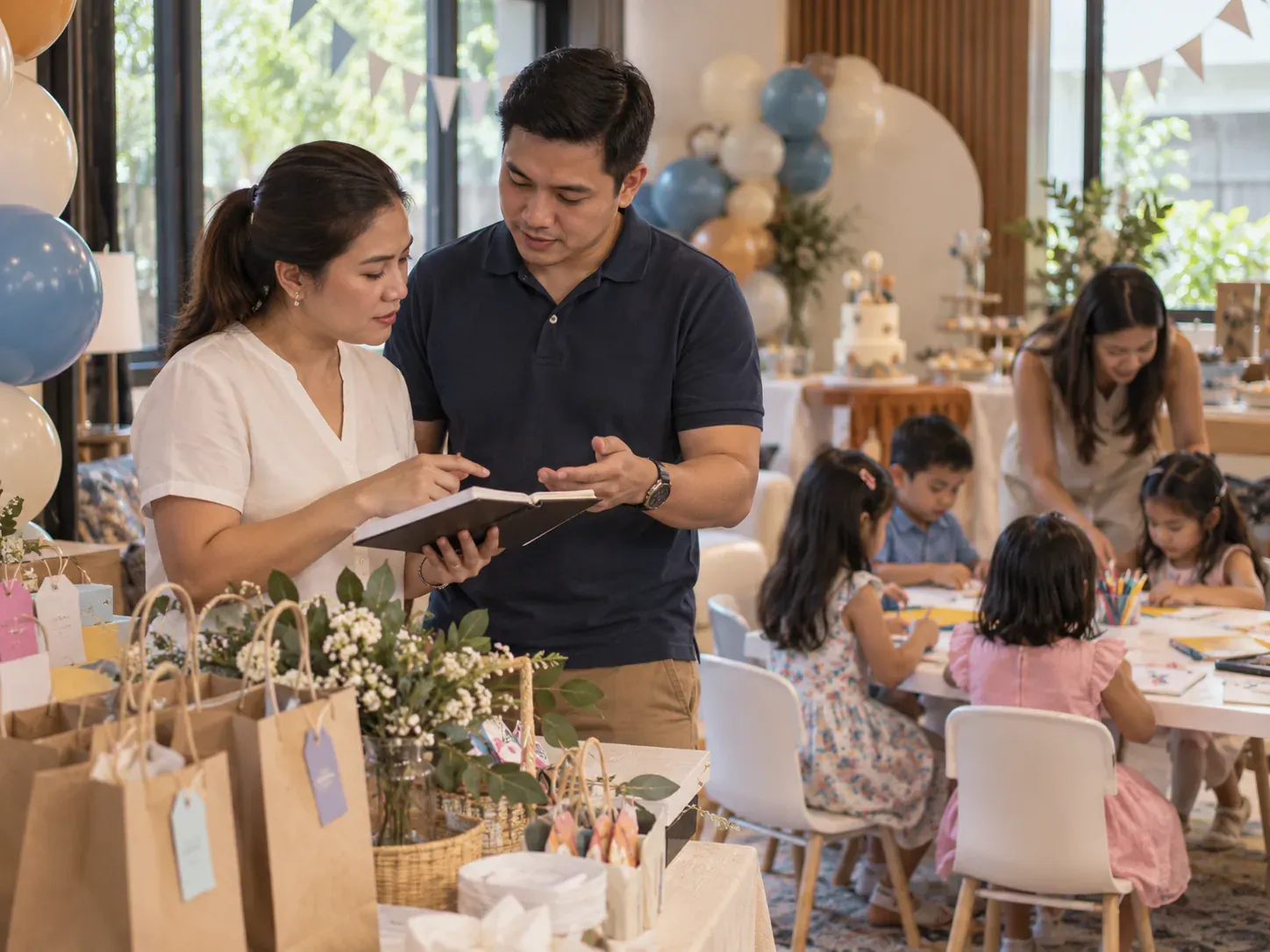
Do not build the schedule around the idea that children must be entertained every minute. Choose activities that match the available space, the ages attending and the number of adults who can supervise or help explain the game.
Mixing one higher-energy activity with a calmer option can make the event easier to manage. Leave room for eating, cake, photos and ordinary play instead of stacking one organized game after another.
Keep a backup simple
If an outdoor plan depends on weather or a game needs more space than expected, have one easy indoor alternative that uses materials you already have.
Final-day coordination
Give the adults clear jobs before guests arrive
Decide who will receive food or suppliers, who will welcome guests, who will stay close to the children’s activity area, who will handle the cake moment, and who will keep an eye on timing. Specific responsibilities are easier to follow than a general plan for “everyone to help.”
Keep essential contact details, confirmations and payment records together. Prepare activity materials, cake tools, candles and any personal items before the first guests arrive so the host is not searching for them during the program.
When the party begins, the plan can stay flexible. If the child is enjoying one part of the celebration, you do not need to rush to the next activity just because it was written on the schedule.
The short version
Build the party around the child and the people attending
Child’s interests → budget → guest mix → party format → venue → food → activities → adult responsibilities → final confirmation.
Use age as a planning clue, not a rule. If the child’s preferences, the guest mix or the venue point in a different direction, adjust the plan.